Art Rubrics for Elementary: How to Grade Art Fairly
Nov 03, 2026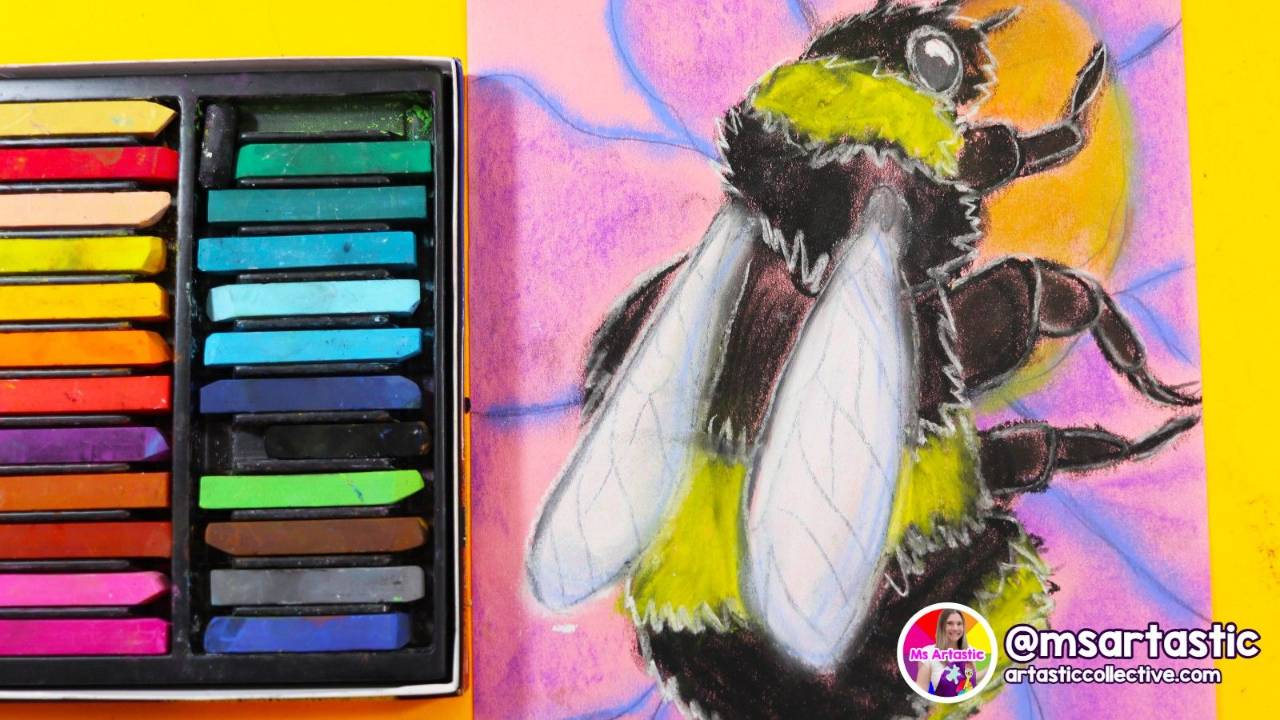
If you are staring at a stack of student artwork and a report card deadline, this one is for you. Art rubrics for elementary students do not have to be complicated, and they definitely do not have to turn art class into a test. A good rubric is simply a clear, kind way of telling kids (and parents, and your principal) what you were looking for and how they did. In this post I am walking you through exactly how to grade art fairly from kindergarten all the way up to grade 9, what to assess, how to build a rubric that actually works, and how reflection pages and artist statements fit in.
Grab your coffee. Let's make grading art feel a whole lot lighter.
Why Grading Art Feels So Hard (and Why It Doesn't Have to)
Most teachers I talk to feel a little uneasy about grading art. Art feels personal. Kids pour themselves into it. And there is that nagging worry that you are grading "talent," which feels unfair to the child who works incredibly hard but whose drawing still looks wobbly.
Here is the shift that changes everything: you are not grading how "good" a piece of art looks. You are grading what you taught. If the lesson was about texture, you look for texture. If the lesson was about overlapping to show space, you look for overlapping. When your criteria come straight from the lesson goals, grading stops being a gut feeling and becomes something you can explain to anyone.
That is exactly what a rubric does. It names the targets before kids start, it gives you a consistent way to look at thirty different artworks, and it gives students language for their own growth. It also protects you. When a parent asks why their child got a certain mark, you can point to the rubric and the reflection page rather than trying to explain a feeling.
If you are newer to teaching art, or you are a classroom teacher who has art on the timetable but no art training, you are not alone. I wrote a whole post on how to teach art when you're not an art teacher, and assessment is one of the biggest pieces of that puzzle.
What Should Art Rubrics for Elementary Actually Measure?
When I build an art rubric, I keep coming back to four big areas. They work for almost any project, at almost any grade, and they balance the finished product with the learning that happened along the way. Here is one of my own rubrics so you can see how it is laid out.
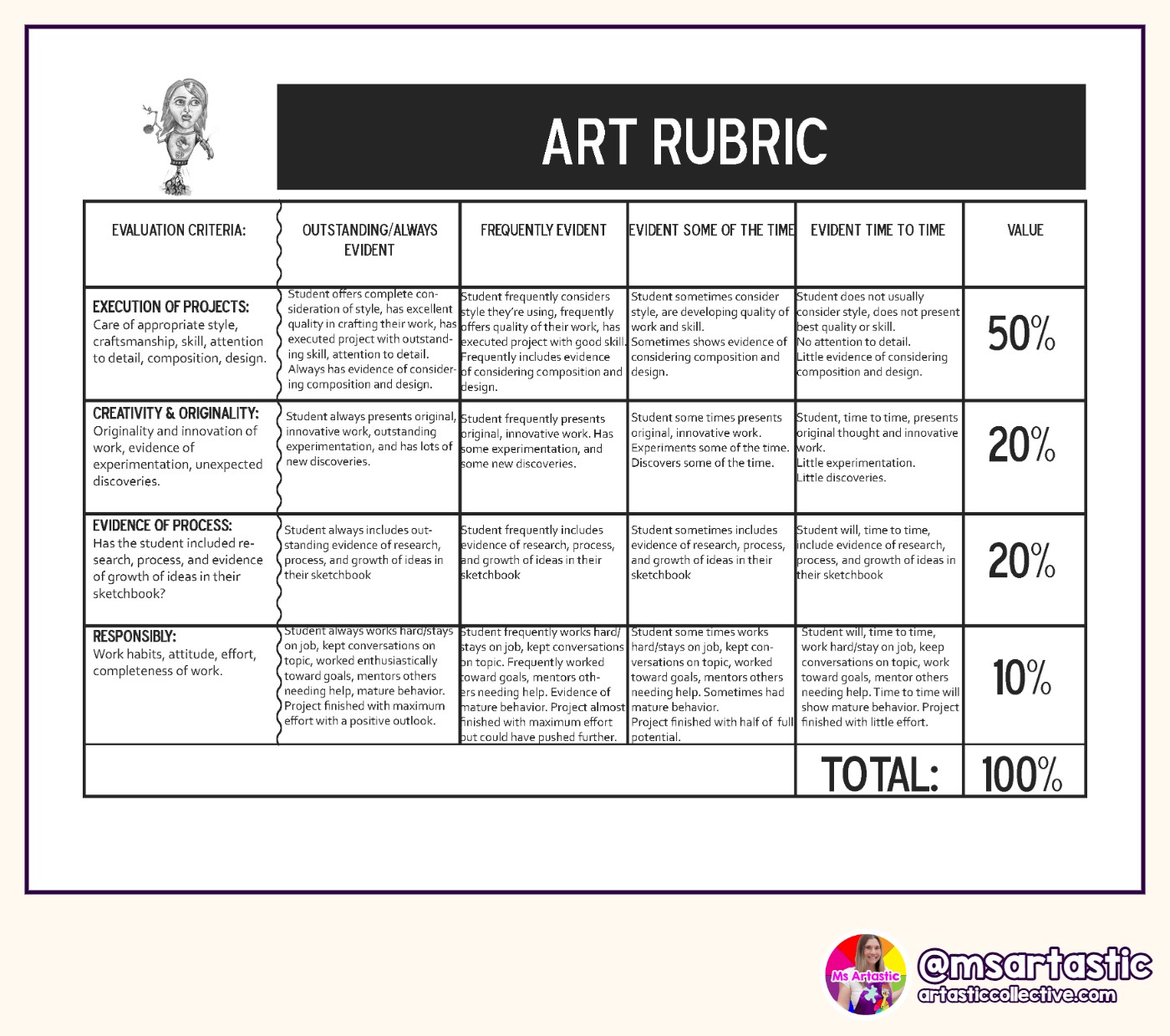
Across the top are four levels: Outstanding/Always Evident, Frequently Evident, Evident Some of the Time and Evident Time to Time. Down the side are the four things I am looking for, each with a weight.
1. Execution of the Project (50%)
This is the craftsmanship piece: care with the style the lesson asked for, skill, attention to detail, composition and design. It carries the most weight because it is where the lesson's art skills show up. If you taught blending with chalk pastels, this is where you look at the blending. If you taught contour line, you look at the line.
The key is to describe what each level looks like in plain words. "Student offers complete consideration of style, has excellent quality in crafting their work" at the top, down to "does not usually consider style, does not present best quality or skill" at the bottom. No mystery, no guessing.
2. Creativity and Originality (20%)
Even in a guided, step-by-step lesson, kids can make choices: their color palette, the background, a pattern, a little character detail. This criterion rewards experimentation and unexpected discoveries. I love including it because it tells kids, right on paper, that their own ideas matter as much as following the steps.
3. Evidence of Process (20%)
Did the student plan, practice and grow their idea? On my rubric this one asks whether the student included research, process and growth of ideas in their sketchbook. This is the criterion that makes art grading fair for the hard-working kid whose final piece is not perfect, because the thinking and practice count too. If you use sketchbooks regularly, this criterion is easy to assess. If you want a simple way to get kids sketching, my free 120 Sketchbook Prompt Task Cards are a great place to start.
4. Responsibility (10%)
Work habits, attitude, effort and completeness. Did they stay on task, keep conversations on topic, work toward their goals, help others, and finish the project? It is a small slice of the grade, but naming it helps with classroom management in the art room, because kids know effort and focus are part of what you are looking at.
You can absolutely change the weights. For kindergarten you might give more weight to process and responsibility. For grades 6 to 9 you might push execution higher. The point is that the categories stay steady, so kids get used to them year after year.
How to Grade Art Fairly: Assess the Lesson, Not the "Talent"
Fair art grading comes down to a few simple habits.
Share the rubric before kids start. Put it on the board or hand out a copy at the beginning of the project. Read the top level out loud and show the finished example. When kids know the target, more of them hit it.
Tie every criterion to a lesson goal. If your lesson objective is "students will use overlapping to create the illusion of space," then overlapping belongs on the rubric. If it was not taught, it should not be graded.
Look at the whole class before you mark anyone. Lay the artwork out on tables or along the hallway floor and walk past all of it first. You will quickly see what "frequently evident" looks like for this group, and your marks will be far more consistent than if you grade one at a time.
Grade growth, not just the final picture. Sketchbook pages, practice sheets and the student's own reflection all give you evidence. A child who struggled with proportion but clearly practiced it three times has learned something real.
Keep comments short and specific. "Your blending in the sky is smooth and soft. Next time, try pressing harder on the darkest shadows." One glow and one grow is plenty.
If you want to see how clear lesson goals make assessment easier, my post on how to write an art lesson plan step by step walks through writing objectives you can actually assess.
How to Build an Art Rubric for Elementary Students in 5 Steps
Want to make your own? Here is the simple process I recommend.
Step 1: Start with your lesson goals. Write down the two or three skills or ideas the lesson teaches. Those become the heart of your "execution" row.
Step 2: Pick your criteria. The four I shared above (execution, creativity, process, responsibility) are a solid starting point. Keep it to three to five rows. More than that and nobody, including you, will read it.
Step 3: Choose your levels. Four levels works well because there is no "middle" to hide in. Use student-friendly words. For little ones, you can even use pictures or emoji faces instead of words.
Step 4: Describe each level in plain language. Write what you would actually see. "Shapes overlap in at least three places to show space" is far more useful than "good use of space."
Step 5: Make it quick to record. A full rubric is perfect for sharing with students, but for recording marks, a small marking sheet saves a lot of time. This is the kind of project marking sheet I use: three per page, one line per criterion, a comment line and a total out of 100.
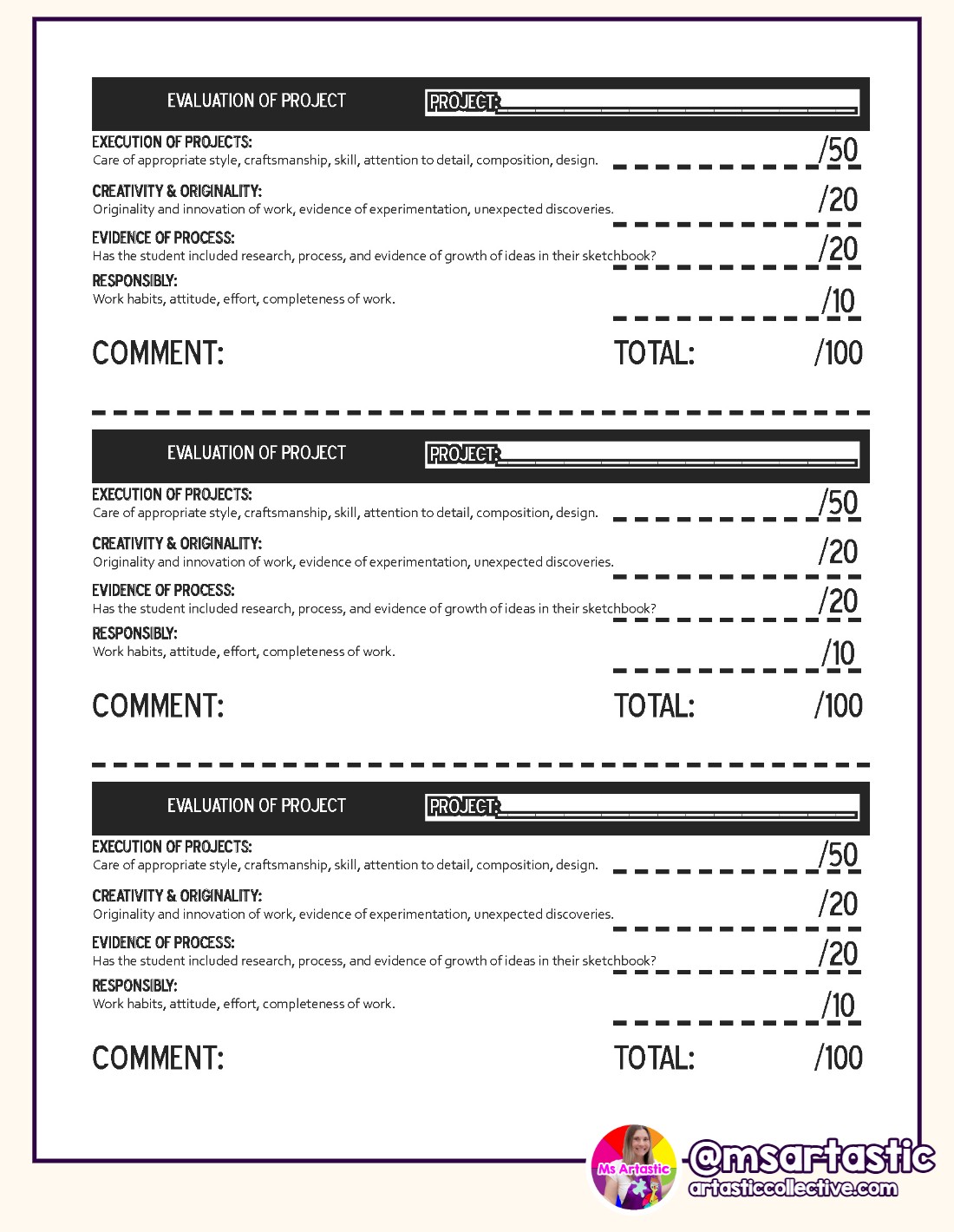
Cut them apart, staple one to the back of each artwork, and you have your mark, your comment and your evidence all in one place. When report cards come around, it is all right there.
Art Rubrics by Grade Level: What Changes from K to Grade 9
The same four big ideas work across grades, but the language and expectations grow with your students.
Kindergarten to Grade 2
Keep it visual and short. Two or three criteria are plenty. Use "I can" statements with simple pictures: "I can use lines," "I can fill my page with color," "I can clean up my space." A three-level scale with faces or stars works well. Much of your assessment at this age happens by watching and talking, so a quick checklist on a clipboard while kids work is your best friend.
Grades 3 to 5
This is where a four-level rubric really shines. Students can read the descriptions and start to self-assess. Introduce art vocabulary right on the rubric, like value, texture, contrast or overlapping, so the words become part of how they talk about their work. If you are teaching the elements of art at these grades, my post on elements of art lessons for kids has one project for each element, and each element makes a natural rubric row.
Grades 6 to 9
Older students can handle more detail and more ownership. Add a stronger "evidence of process" piece with sketchbook planning, thumbnails and research. Ask them to write an artist statement and score themselves on the rubric before you do. Comparing their score with yours is one of the most powerful conversations you can have with a middle schooler about their art. The principles of design also become great rubric targets at this age; I break those down in how to teach the principles of design.
Beyond the Rubric: Art Reflection Sheets, Artist Statements and Self-Assessment
A rubric tells you what you see. A reflection tells you what the child was thinking. Put the two together and you have a really complete picture of their learning, which is exactly what you want when you sit down to write report cards.
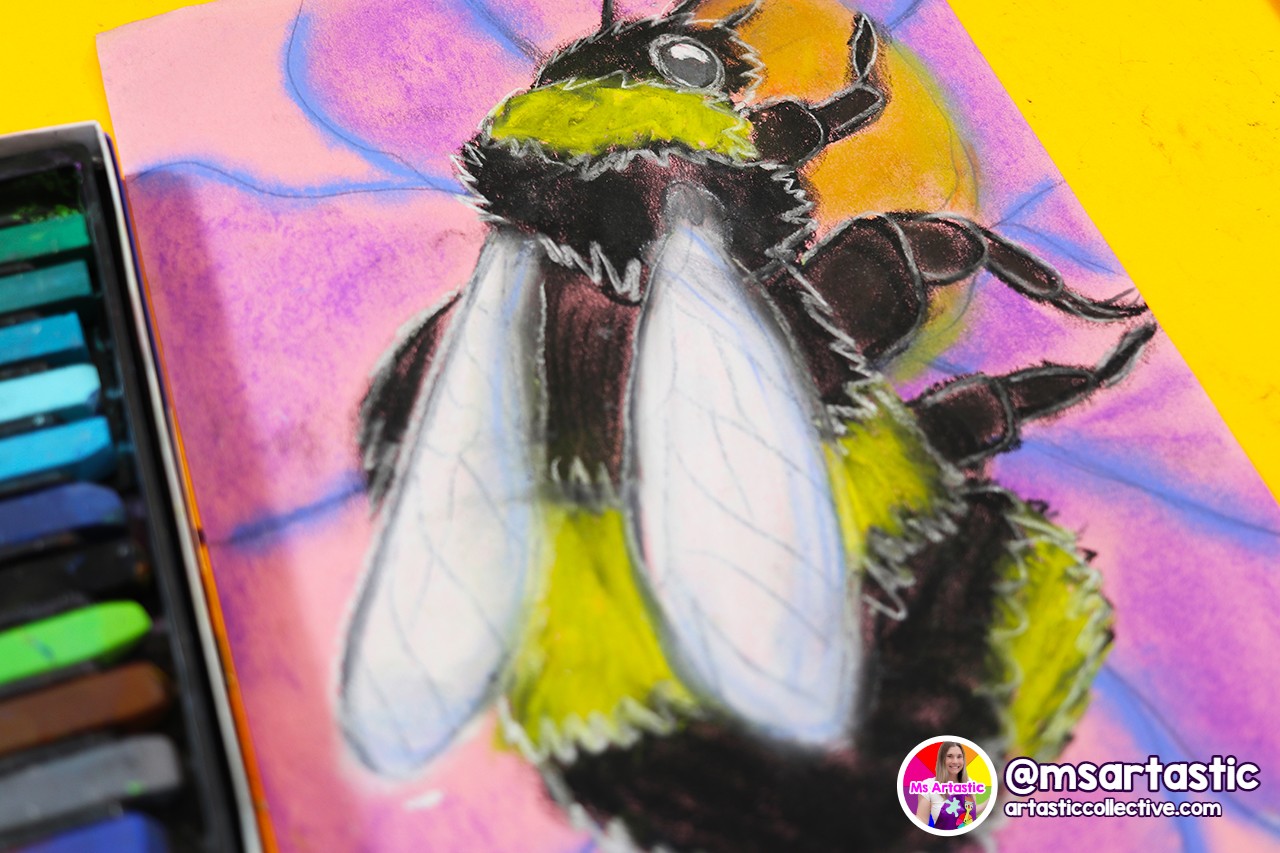
This chalk pastel bee is from the texture lesson in the Artastic Collective Elements of Art bundle. Along with the video, lesson plan, finished example and step-by-step handout, it comes with a rubric, reflection worksheets and an artist statement, so the assessment is ready the day you teach it.
Reflection sheets can be as simple as three questions: What are you most proud of? What was tricky? What would you try next time? Younger students can circle a face and draw a small picture. Older students can write a paragraph.
Artist statements ask students to explain their choices: what inspired them, which materials they used and why, and how they used the element or principle you taught. They build writing skills and art vocabulary at the same time, which is a nice bonus if you need cross-curricular connections.
Self-assessment on the rubric is the step most of us skip because of time, but it is worth it. Have students highlight the level they think they reached in each row before handing in their work. It takes five minutes and it tells you so much.
Gallery walks and peer feedback are another gentle way to assess. Set out the artwork, give each student a few sticky notes and ask for one specific compliment per piece. Kids practice using art vocabulary, and you get to listen in on what they noticed.
See the Art Lessons With Rubrics in the Artastic Collective
Making Art Report Cards Less Stressful
Report card season is when art grading really hits. A few things make it so much easier.
Keep your evidence with the art. If every project has a marking sheet or rubric stapled to the back, you are not trying to remember who did what in October.
Grade fewer, bigger projects. You do not need a mark for every class. Two or three assessed projects per term, plus your observations and sketchbook checks, give you plenty of evidence.
Write comments from your rubric language. If your rubric says "frequently considers composition and design," your comment can say "Maya frequently plans her compositions carefully and is building strong blending skills with oil pastels." The rubric does half the writing for you.
Plan assessment into your year. When you map out your units, decide ahead of time which project in each unit will be your assessed piece. My guide on how to plan a year of art lessons can help you build that in from the start.
Be kind to yourself. You do not have to grade everything. Some art days are just for exploring, and that is a good thing.
Where to Find Ready-Made Art Rubrics for Elementary
Building rubrics from scratch takes time most of us do not have. This is one of the reasons I built the Artastic Collective, my K to 9 art curriculum membership. The lessons inside come with the teaching pieces and the assessment pieces together, so you are never hunting for a rubric the night before report cards are due.
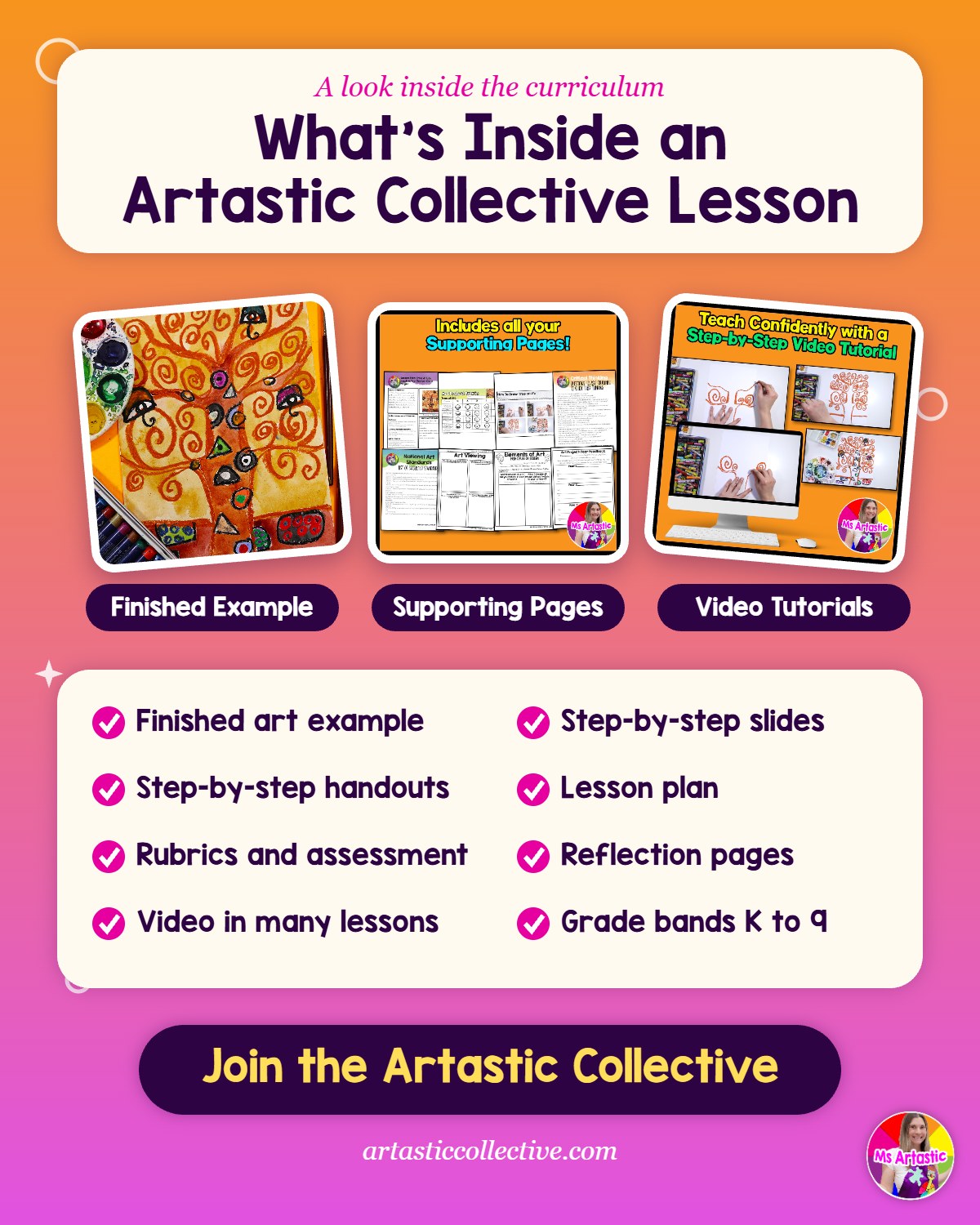
Here are a few examples of what that looks like in real lessons.
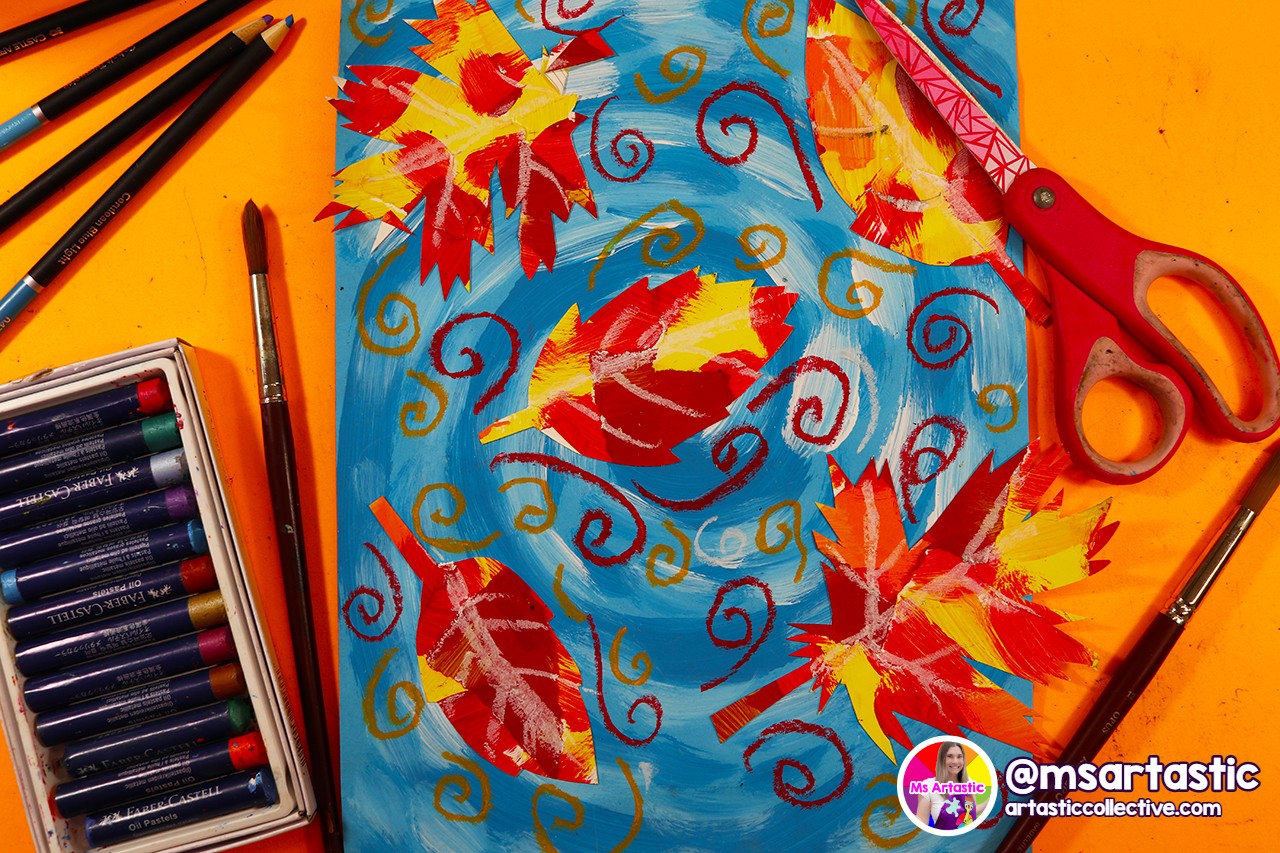
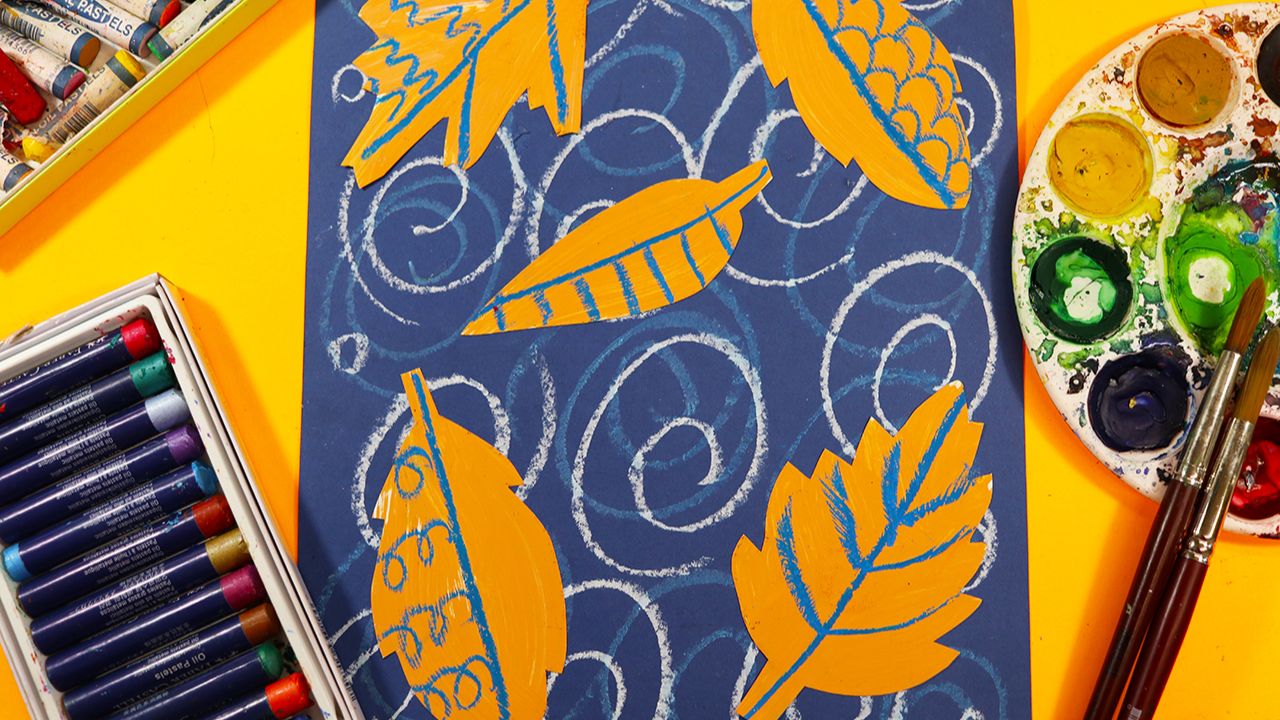
The Mixed Media Leaves lesson for grades 2 to 5 includes a lesson plan, demonstration slides, a step-by-step draw handout, and then a rubric, an assessment page, a reflection and an artist statement. I share how that lesson comes together in my mixed media autumn leaves art lesson post.
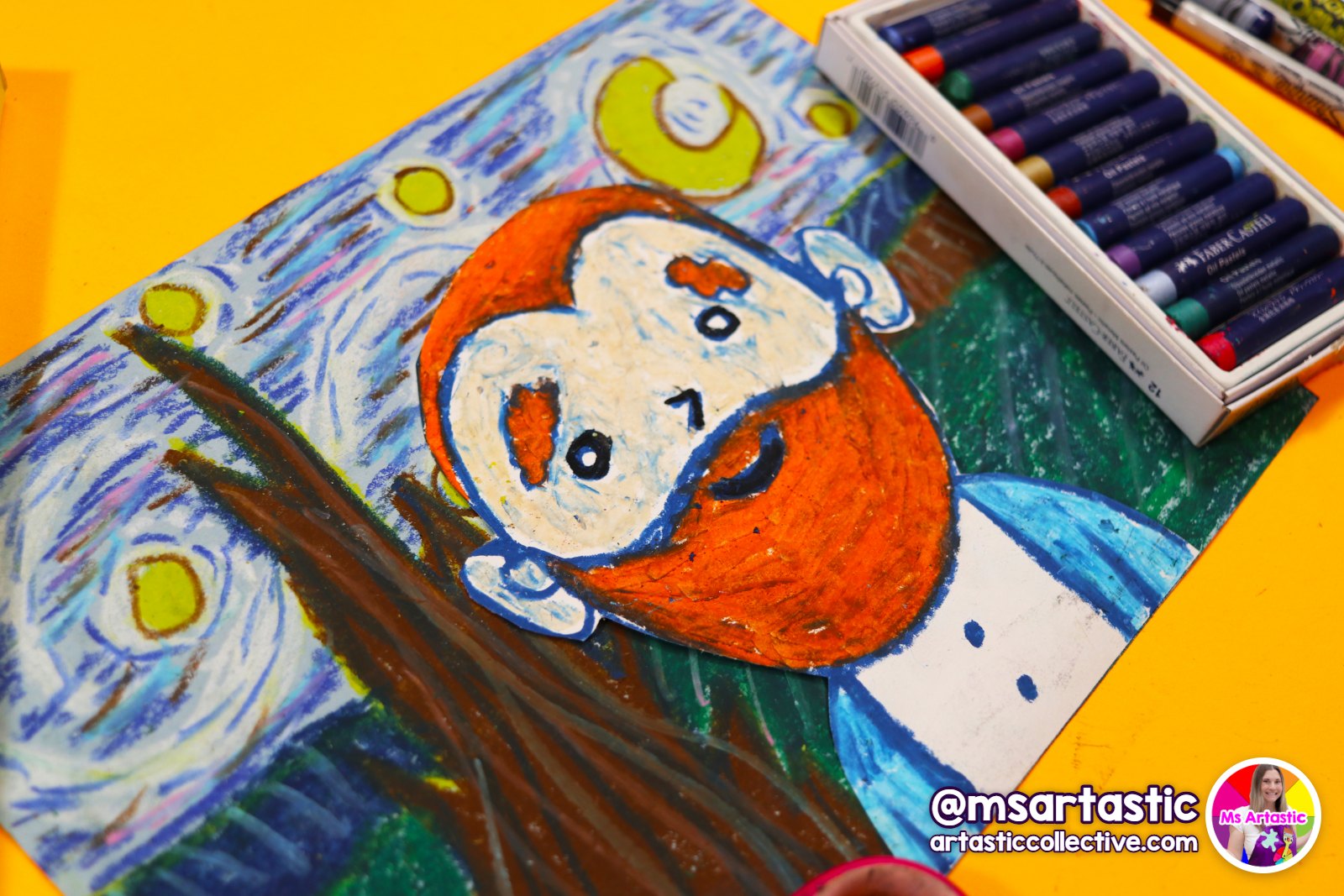
The Van Gogh Starry Night Portrait lesson for grades 1 to 4 comes with a full video tutorial, a lesson plan, a rubric, a finished example and a step-by-step drawing handout. If you love teaching with videos, I wrote about how to teach with video art lessons too.
Inside the Artastic Collective, lessons are organized by collection (Elements and Principles, Artists and Art History, Holidays and Seasonal, Sketchbooks, Ceramics and Sculpture and more) and by grade band, so you can find a lesson and its rubric for the grade you teach.
Not ready for a whole curriculum? Several of my lessons are also available on their own in my shop, with their assessment pages included. The Poppy Art Lesson comes with a rubric for assessment, a student and teacher art project assessment, a student project reflection and an artist statement template, and the Van Gogh Starry Night Portrait lesson is there too.
Get Free Art Lessons in Your Inbox
If you would like to try some of my lessons before anything else, join my Free Art Lesson Library. You will get free art lessons for teachers and homeschool families, plus my newsletter with teaching tips, seasonal ideas and new lessons as they come out.
Get the Free Art Lesson Library
Art Rubrics for Elementary: Frequently Asked Questions
How do you grade art without grading talent?
Grade only what you taught. Build your rubric from the lesson goals (a skill, an element or a principle), add a row for process and a row for effort, and share it before students begin. That way a hard-working student who practiced and planned can do well even if their final piece is not polished.
How many criteria should an elementary art rubric have?
Three to five is the sweet spot. For kindergarten to grade 2, two or three simple "I can" statements are plenty. For grades 3 to 9, four criteria such as execution, creativity, process and responsibility cover almost every project.
Should every art project be graded?
No. Choose two or three bigger projects per term to assess formally, and let the other lessons be practice and exploration. Use sketchbook checks and observation notes to round out your picture of each student.
What is the difference between a rubric and a reflection sheet?
A rubric is your scoring guide: it describes what each level of work looks like. A reflection sheet is the student's voice: what they are proud of, what was tricky and what they would try next. Using both gives you the clearest picture for report cards and parent conversations.
Can I use the same art rubric for every project?
You can keep the same categories all year, which helps students get comfortable with them. Just change the wording in the execution row to match each lesson's skill, like blending, texture, overlapping or proportion.
You've Got This
Grading art is really about noticing. Noticing what kids learned, how they grew, and where they want to go next. A clear rubric, a quick marking sheet and a short reflection turn that noticing into something you can share with students, families and your school, without taking the joy out of art class.
If you would love to have the lessons, rubrics, reflection pages and artist statements ready to go for every grade, come take a look at the Artastic Collective. It is built for busy teachers and homeschool families who want art to feel doable.
Learn More About the Artastic Collective
Happy creating,
Kathleen (Ms Artastic)
Discover FREE Art Lessons & Resources
Let's Make Some Art! I will create the Art Lessons & Resources, you inspire the kids!
Stay connected with news and updates!
Join our mailing list to receive the latest news and updates from our team.
Don't worry, your information will not be shared.
We hate SPAM. We will never sell your information, for any reason.
Ms Artastic