How to Plan a Year of Art Lessons Without Getting Overwhelmed
Jul 28, 2026
How to Plan a Year of Art Lessons Without Getting Overwhelmed
Planning a full year of art lessons can sound lovely in theory. You imagine a beautifully organized year where every project flows naturally into the next, every supply is ready, every seasonal activity lands at exactly the right time, and your students build skills with the calm confidence of tiny professional artists.
And then real teaching enters the room wearing mismatched shoes and carrying a half-dried glue bottle.
Suddenly, planning a year of elementary art lessons, middle school art projects, seasonal art activities, artist studies, drawing lessons, painting projects, collage lessons, sculpture ideas, art worksheets, sub plans, and back to school art resources can feel like a lot. Not because you are doing anything wrong, but because art teaching asks you to think about so many moving pieces at once.
You are not just planning projects. You are planning skills, materials, routines, grade levels, student confidence, clean-up, storage, displays, assessment, differentiation, and the very real question of whether you actually have enough black markers for 300 students.
So if planning a full year of art makes your brain feel like an overstuffed supply cabinet, take a breath.
You do not need to plan everything perfectly.
You need a clear starting point, a simple structure, and permission to build the year in a way that feels supportive instead of overwhelming.
Start With the Big Picture, Not Every Tiny Lesson
One of the biggest reasons year-long art planning feels overwhelming is that teachers often start by trying to choose every single project right away. That can quickly turn into a spiral of searching, saving, second-guessing, and wondering why you now have 47 tabs open and no actual plan.
Instead, begin with the big picture.
Ask yourself what you want students to experience over the year. Do you want them to explore the elements of art? Do you want them to build confidence with drawing, painting, collage, printmaking, mixed media, or sculpture? Do you want to include artist studies, art history, seasonal projects, cultural connections, visual journals, or creative writing? Do you want students to develop more independence, stronger craftsmanship, or more personal voice?
You do not need all the answers immediately. You are simply creating a loose map.
Think of your year as a creative journey. Students do not need to do everything at once. They need a thoughtful path that helps them grow over time.
Choose a Simple Year-Long Structure
A year of art feels much more manageable when you organize it into sections. Instead of planning week by week from a blank page, try choosing a structure that helps you see the year clearly.
You might plan by elements of art, moving through line, shape, color, value, texture, form, and space. You might plan by medium, giving students experiences with drawing, painting, collage, printmaking, sculpture, ceramics, and mixed media. You might plan by season, using back to school art lessons, fall art projects, winter art activities, spring art lessons, and end of year art activities to create a natural rhythm. You might plan by grade-level skill progression, slowly building from simple techniques to more complex projects.
There is no one perfect way to plan.
The best structure is the one that helps you teach with more clarity and less panic.
If you teach multiple grades, you may want a repeated structure across grade levels with different projects and expectations. For example, each grade might begin with a line or identity project, explore color in the fall, move into value or texture later, and finish with more open-ended creative work. This gives your year consistency without making every grade do the same thing.
A simple structure makes planning feel less like inventing the universe and more like filling in a path.
Plan the First Month Before the Whole Year
If planning the entire year feels too big, start with the first month. Truly. That is allowed.
The first month of art is important because it sets routines, builds confidence, introduces materials, and helps you learn who your students are. Instead of trying to finalize every project from September to June, focus first on what students need at the beginning.
You might choose back to school art lessons that help students feel welcome. You might begin with name art, sketchbook covers, All About Me art, simple drawing prompts, line art, or an introductory elements of art lesson. You might include an activity that teaches routines for gathering supplies, cleaning up, storing work, and handling materials.
Once the first month feels steady, planning the rest of the year becomes easier.
A strong start gives you information. You learn which classes need more support, which students need confidence-building, which routines need more practice, and what skills might need extra attention.
You do not need to know every answer before the year begins. You can let the first month teach you something.
Build Around Core Skills
A strong year of art does not need to be a random collection of cute projects. It becomes more meaningful when it is built around core skills.
Think about the visual art skills students need to practice over time. These might include line, shape, color, value, texture, space, form, pattern, composition, observation, craftsmanship, creative problem-solving, reflection, and artist vocabulary.
Once you know the skills, you can choose projects that support them.
For example, if you want students to understand line, you might plan line drawings, name art, contour drawing, pattern design, or zentangle-inspired art. If you want students to explore color, you might include color wheels, warm and cool color projects, complementary color designs, and painting lessons. If you want students to understand value, you might plan shading scales, value drawings, monochromatic painting, or still life work.
Skills give your year a backbone.
Projects give it personality.
You need both.
Repeat Routines Across Projects
One of the kindest things you can do for yourself is repeat routines. You do not need every project to introduce a completely new structure, process, and clean-up system.
Students become more independent when they know what to expect. If your lessons often begin with a short introduction, visual example, demonstration, work time, clean-up routine, and reflection, students learn the rhythm. If sketchbooks are used consistently, students know how to begin. If materials are stored and returned the same way, clean-up becomes faster. If early finishers have clear choices, you reduce the “I’m done, now what?” parade.
A year of art feels less overwhelming when routines carry across lessons.
This does not make your teaching boring. It makes it calmer.
The creativity can change. The projects can be exciting. The materials can vary. But the routines can stay familiar enough to support everyone.
That consistency gives students confidence and gives you breathing room.
Plan With Materials in Mind
Art planning is not just about what looks beautiful. It is also about what is realistic.
Before you plan a full year of projects, look at your materials. What do you already have? What do you need to order? What supplies are limited? Which materials require more prep and clean-up? Which projects need drying space? Which materials can be used across multiple grade levels?
If you plan six paint-heavy units in a row, your future self may have words with you. If you schedule clay, papier-mâché, printmaking, and giant collage all in the same month, you may accidentally create a supply management adventure no one asked for.
Try to spread out high-prep materials. Mix lower-prep lessons with more involved projects. Use drawing, coloring, and sketchbook work between messier units. Plan paint when you have the energy and space to manage it. Save projects with lots of drying time for weeks when the schedule allows it.
A realistic art plan respects your materials, your space, and your nervous system.
That matters.
Use Seasonal Art Without Letting It Take Over
Seasonal art can be wonderful. Students love fall art projects, winter art lessons, spring art activities, and summer art ideas because they connect to the world around them. Seasonal lessons can create beautiful displays and make the year feel fresh and engaging.
But seasonal art does not need to take over your entire curriculum.
A balanced year might include seasonal projects that still teach strong art skills. A fall leaf project can teach line, texture, warm colors, or composition. A winter landscape can teach space, value, or cool colors. A spring flower project can teach observation, pattern, or color mixing. A summer art activity can support drawing, storytelling, or creative reflection.
When seasonal lessons connect to your skills, they become more than cute projects.
They become meaningful parts of your curriculum.
That is the sweet spot.
Leave Space for Flexibility
Even the best year-long art plan needs breathing room. Real school years do not unfold perfectly. There will be assemblies, snow days, field trips, schedule changes, testing, shortened classes, supply delays, and the occasional lesson that takes twice as long as expected because students got deeply invested in adding tiny details.
Build space into your plan.
Do not schedule every single week so tightly that one missed class ruins everything. Leave buffer weeks. Have flexible drawing prompts, sketchbook activities, art worksheets, or mini lessons ready for odd days. Keep a few art sub plans or low-prep activities available for when life happens.
A flexible plan is not a weak plan.
It is a realistic one.
When your year has space, you can respond to student needs, extend projects that are going well, simplify when needed, and avoid feeling like you are constantly behind.
Create a Simple Planning Map
A simple planning map can help you see the year without getting lost in details. It does not have to be fancy. You can create a table, calendar, notebook page, spreadsheet, or sticky note wall.
For each month or term, write the main focus. For example:
September: routines, confidence, line, name art, sketchbooks.
October: color theory, warm colors, fall art, painting routines.
November: value, shading, drawing skills.
December: winter art, pattern, mixed media.
January: artist study, collage, composition.
February: color schemes, printmaking, or design.
March: texture, sculpture, or form.
April: nature art, observation, painting.
May: choice projects, portfolio work, reflection.
June: summer art, finishing, review, celebration.
This kind of map gives you direction without locking you into every exact lesson. You can add resources and projects as you go.
It is enough to know the road without planning every pebble.
Support Yourself With Ready-to-Use Resources
Planning a year of art from scratch is a lot. You do not need to do it all alone, and you do not need to create every resource yourself.
Using ready-to-use art lessons, planning tools, seasonal art projects, back to school art resources, and art activities can save time and help you focus on teaching. Resources do not replace your creativity. They support it.
They give you a starting point.
They help you see lesson structure.
They reduce decision fatigue.
They make it easier to plan when your brain is already full.
This is especially helpful if you teach multiple grade levels, travel between classrooms, homeschool different ages, or are trying to build a more complete art curriculum without spending every evening planning.
Teachers deserve support. Planning should not have to feel like carrying the entire art department on your back while balancing a stack of drying paintings.
Start With the Free Art Lesson Library
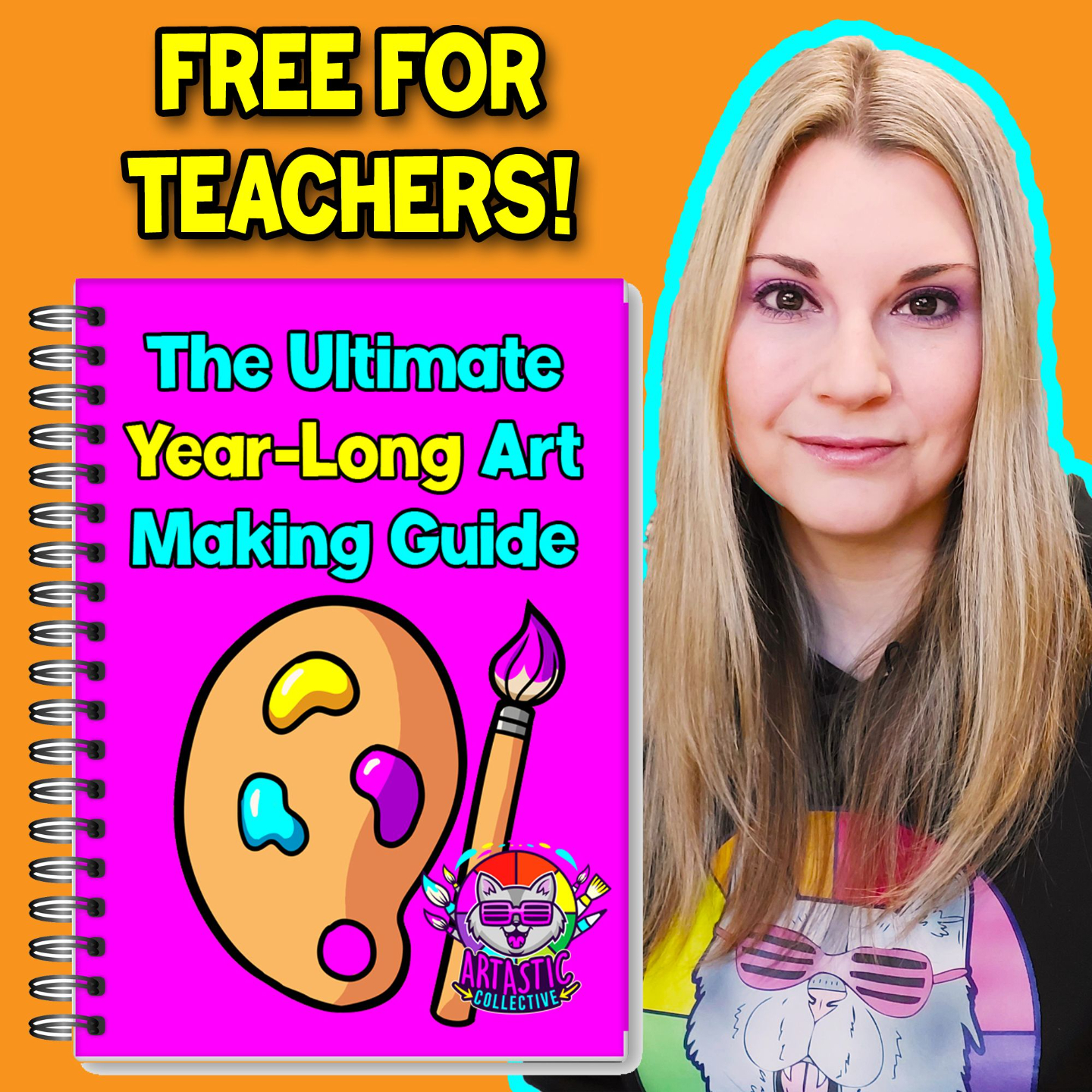
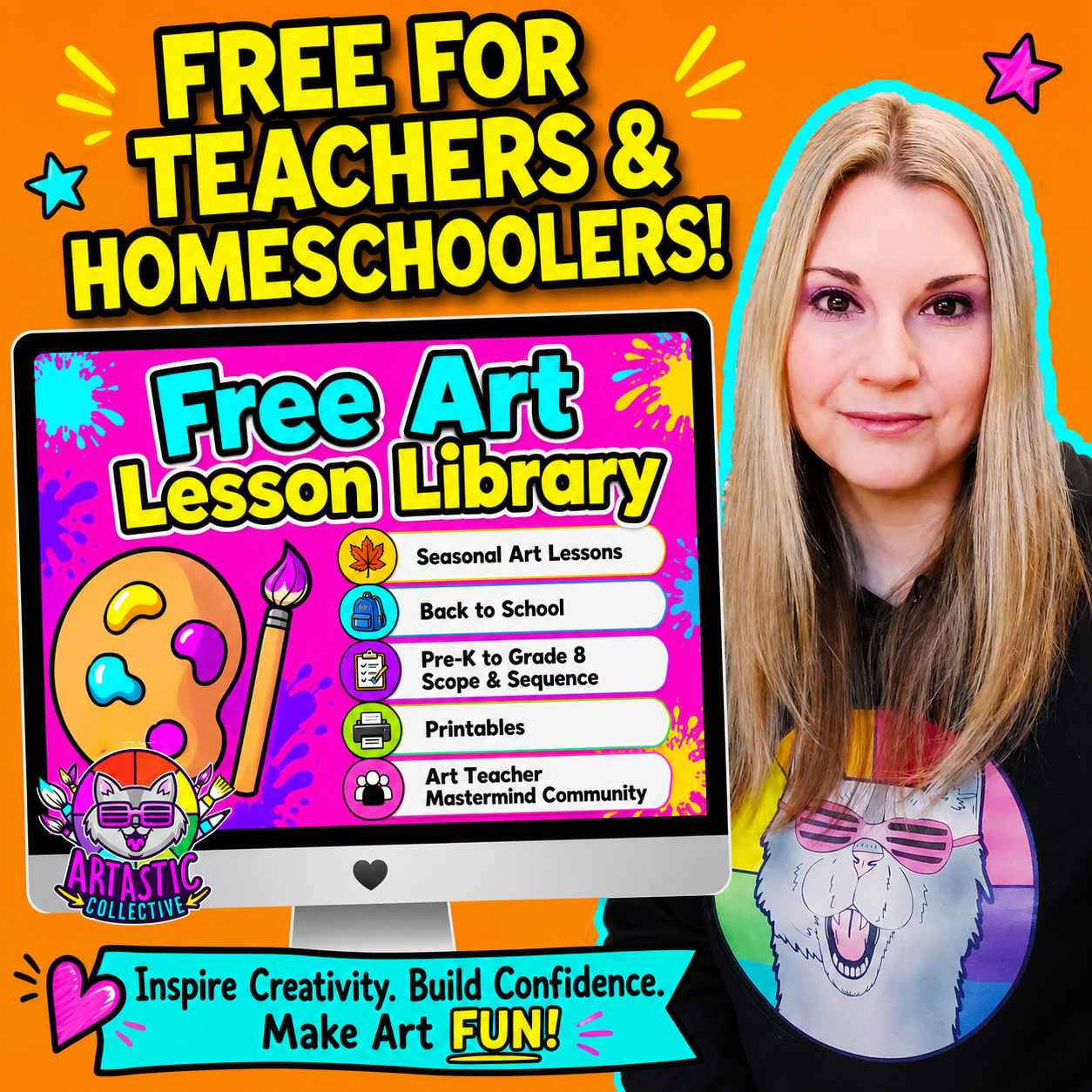
If you are planning a year of art lessons and want a simple place to begin, I would love to invite you to explore the Free Art Lesson Library.
Inside, you can find free art lessons, seasonal art projects, back to school art resources, art planning tools, and creative ideas for art teachers, classroom teachers, and homeschool educators. It is designed to help you gather inspiration, support your planning, and bring more creativity into your year without starting from scratch every time.
You can join the Free Art Lesson Library here:
Whether you are planning your first month, gathering seasonal ideas, or simply wanting a few reliable art lessons to tuck into your year, the free library gives you a helpful starting point.
A Soft Next Step for More Curriculum Support
If you know you want even more support with planning a full year of art, you may also want to keep an eye on the Artastic Collective Art Curriculum.
The Artastic Collective is designed to help teachers feel supported with ready-to-use art lessons, curriculum planning, creative resources, and structured support for teaching art across the year. It is especially helpful if you want to spend less time searching for what to teach and more time actually teaching, creating, and supporting your students.
No pressure, no planning panic, no “I must figure out every grade level by myself before breakfast” energy.
Just support when you are ready for it.
You can start with the free library first, and then, if you want more complete curriculum support later, you can watch for the Artastic Collective waitlist and future enrollment opportunities through the emails.
Let the Year Feel Like a Path, Not a Mountain
Planning a year of art lessons does not need to feel like climbing a mountain in flip flops while carrying a box of tempera paint.
It can feel like building a path.
One skill at a time.
One month at a time.
One unit at a time.
One creative routine at a time.
Start with the big picture. Choose a simple structure. Plan the first month. Build around core skills. Repeat routines. Use materials realistically. Add seasonal art intentionally. Leave room for flexibility. Support yourself with resources that make teaching easier.
You do not need a perfect plan.
You need a plan that supports you and your students.
That is enough to begin.
Final Thoughts
A full year of art can feel overwhelming when you think you have to plan every lesson, every material, every display, every skill, and every possible schedule change all at once. But when you slow down and build a simple structure, the year becomes much more manageable.
Your art curriculum does not need to be perfect to be meaningful.
It needs to help students grow.
It needs to build confidence.
It needs to give students opportunities to explore materials, practice skills, make choices, reflect, and see themselves as artists.
And you deserve planning support that helps make that possible.
Start with the Free Art Lesson Library, gather a few ideas, and let your year begin one creative step at a time.
CLICK HERE to join the Free Art Lesson Library and start planning your year of art lessons with more ease and inspiration.
Sincerely,
Ms Artastic
Discover FREE Art Lessons & Resources
Let's Make Some Art! I will create the Art Lessons & Resources, you inspire the kids!
Stay connected with news and updates!
Join our mailing list to receive the latest news and updates from our team.
Don't worry, your information will not be shared.
We hate SPAM. We will never sell your information, for any reason.
Ms Artastic