Middle School Art Lessons: How to Plan Art for Grades 6–8
Nov 10, 2026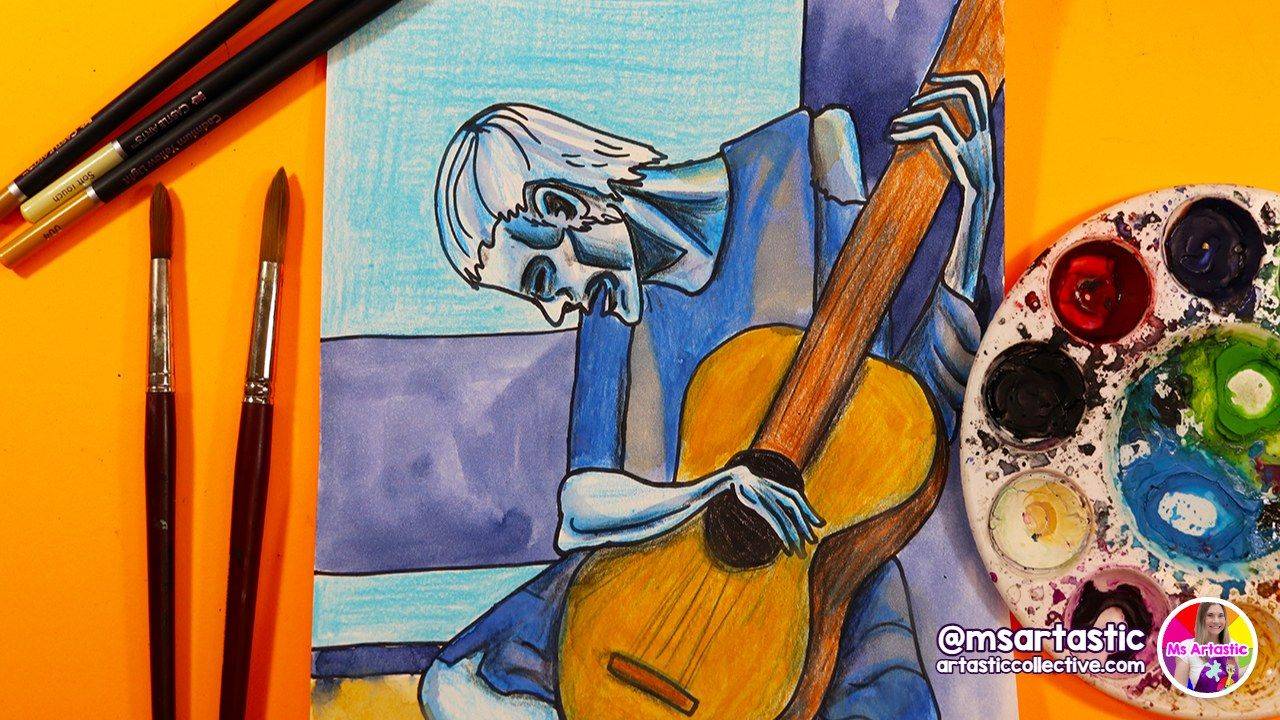
If you have ever stood in front of a room of sixth, seventh or eighth graders and watched them decide, in about four seconds, whether your art lesson is "cool" or "babyish," you know that middle school art lessons are their own special thing. Tweens and young teens want real skills, real materials and a little bit of freedom, and they can smell a craft project dressed up as art from across the room. So grab a coffee and let's talk about how to plan art for grades 6 to 8 in a way that keeps them curious, builds actual skills and doesn't have you rewriting every lesson at midnight.
This post contains affiliate links. As an Amazon Associate I earn from qualifying purchases.
I'm Kathleen, Ms Artastic. I spent years in the art room and I now design art lessons and curriculum full time for art teachers, classroom teachers and homeschool families. In this guide I'll walk you through what middle schoolers need from art class, a simple structure for every lesson, middle school art project ideas by element, principle and artist, a real sample year, sketchbooks, sub days and grading. And if you are hunting for free art lesson plans for middle school, I'll point you to those too.
What Middle Schoolers Need From Art Class
Middle school is such an interesting age for art. Many students arrive having decided they are "not artistic," usually because their drawings stopped looking the way they wanted somewhere around fourth grade. Others are already filling sketchbooks with characters and want to know how to make things look real. Your job is to reach both groups at the same time, which sounds hard, but a few principles make it much easier.
They want real techniques. Shading with charcoal, mixing colors on purpose, layering watercolor, drawing in perspective. When a lesson teaches a technique they can see working, the "I can't draw" crowd starts to relax, because now there is a method instead of magic.
They want choice. Twelve-year-olds are figuring out who they are. A lesson that teaches one clear skill but lets them choose the subject, the color scheme or the background feels respectful, and it gives you thirty different artworks instead of thirty copies.
They want it to matter. Connecting art to artists, history, identity and the world around them helps middle schoolers see art as something people actually do, not just something they color in. Artist studies, social emotional lessons and art history units do a lot of work here.
They need safety to try. Most middle school art reluctance is really a fear of looking silly in front of friends. Low-stakes sketchbook practice, process-focused feedback and clear rubrics lower that fear more than any pep talk.
A Simple Structure for Every Middle School Art Lesson
Whether your class periods are 45 minutes or 75, a predictable shape helps tweens settle in. Here is the rhythm I recommend for teaching art to middle schoolers, and it is the same shape I build my own lessons around.
- The hook (5 to 10 minutes). Show the finished example, a famous artwork, a short reading or a poem about the artist or idea. Ask what they notice. This is where curiosity starts.
- The skill (10 minutes). Teach one technique clearly: a value scale, a color-mixing chart, a way to layer oil pastel. Keep the demonstration short and let them practice on scrap paper or in their sketchbooks.
- Studio time (most of the period, over several classes). Students work on their artwork using step-by-step slides or handouts as a guide while you circulate. Most middle school projects run over two to four classes, and that is a good thing.
- Reflection (5 minutes). A quick exit question, a reflection page or an artist statement. This is where students name what they learned, which is also your assessment evidence.
If you want to go deeper on writing lessons in this shape, my post on how to plan a year of art lessons without getting overwhelmed shows how individual lessons fit into units and a full year.
Middle School Art Project Ideas by Element and Principle
The elements of art and principles of design are the backbone of any good middle school art curriculum. By grades 6 to 8, students are ready to use them on purpose rather than just name them. Here are project ideas that work beautifully at this age, all drawn from lessons written for grades 6 to 9 inside the Artastic Collective.
Value: charcoal and contrast
Charcoal is a middle school favorite because it feels grown-up and forgiving at the same time. In the Charcoal Mouse lesson, students explore a full range of values with charcoal to build contrast and visual interest. It comes with a poem about mice to hook students and bring in a little literacy, plus an article about the element of value. Value is also a wonderful place to teach blending, lifting with an eraser and building darks slowly.
Color: mixing with purpose
At this age, color theory should move beyond naming the color wheel. Lessons like a color-mixing fish, a warm and cool color scheme sea turtle or a neutral color scheme line landscape ask students to choose a color scheme and mix it themselves. That decision-making is where real learning happens.
Space and watercolor: galaxies and landscapes
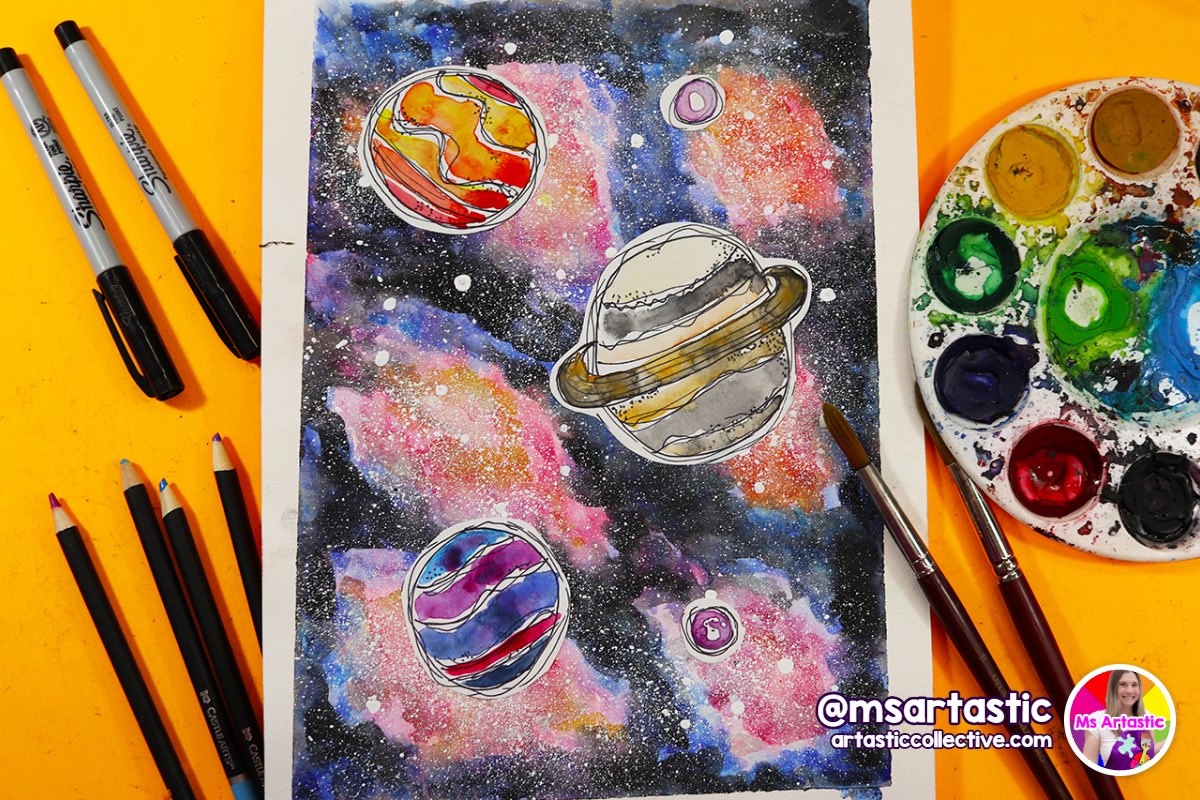
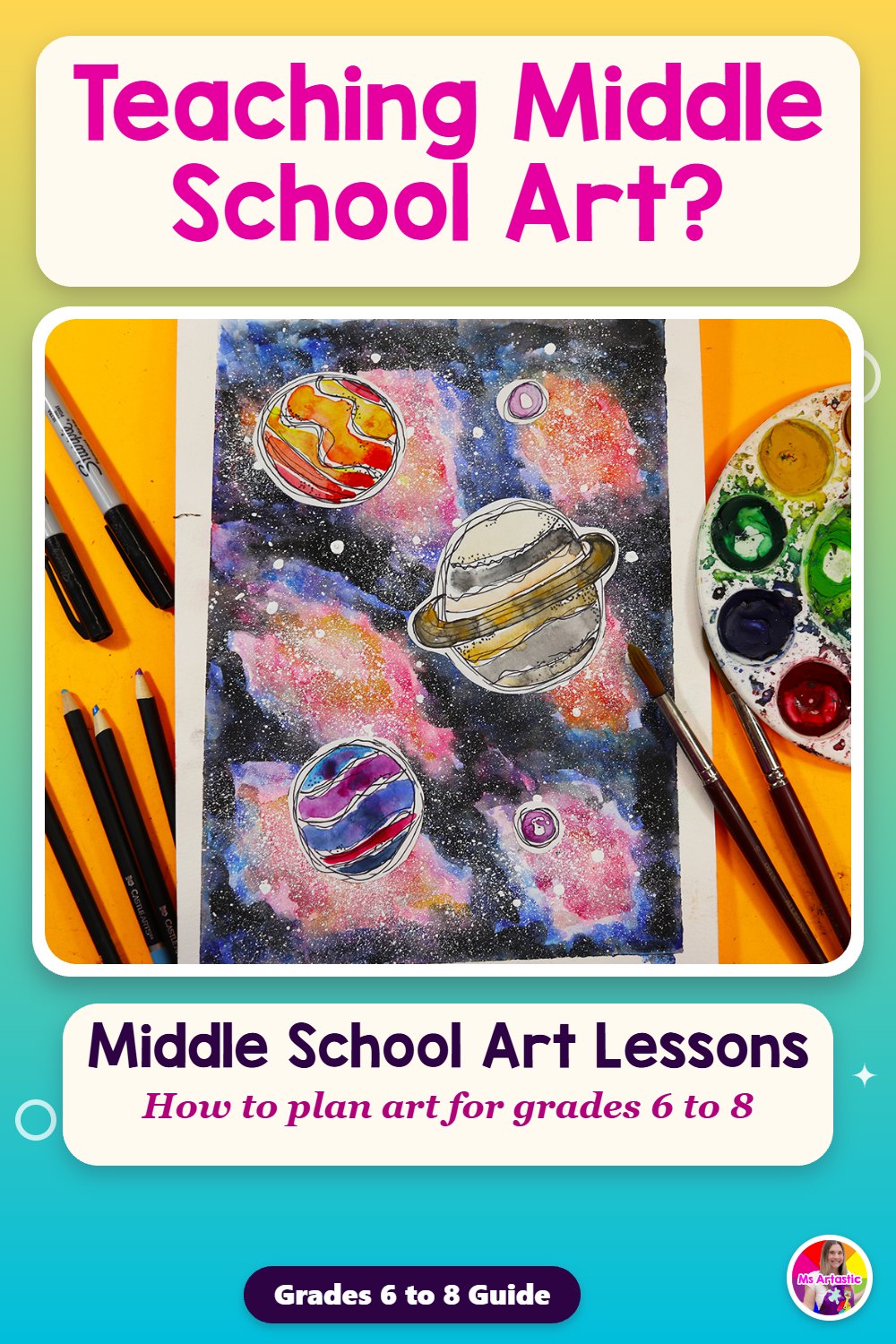
Watercolor gives middle schoolers a chance to experiment, and galaxies are perfect for it. In the Galaxy Painting lesson, students use pen and watercolor and learn how to layer, then add stars by spraying white acrylic paint with a toothbrush. It is messy in the best way, and every galaxy turns out different.
Principles of design: movement, proportion and rhythm
Principles feel abstract until students see them in a strong image. A giant squid drawn in soft pastels makes movement obvious. A giant turtle makes proportion fun to talk about. Repeating ladybugs make rhythm visible. These are written specifically for grades 6 to 9, and my guide on how to teach the principles of design breaks each principle down by grade level if you want the bigger picture.
Artists and Art History for Grades 6 to 8
This is where middle school art really comes alive. Older students can handle more of the story behind the art: why an artist painted the way they did, what was happening in the world, and how an idea changed art history. They also love artists who broke the rules.
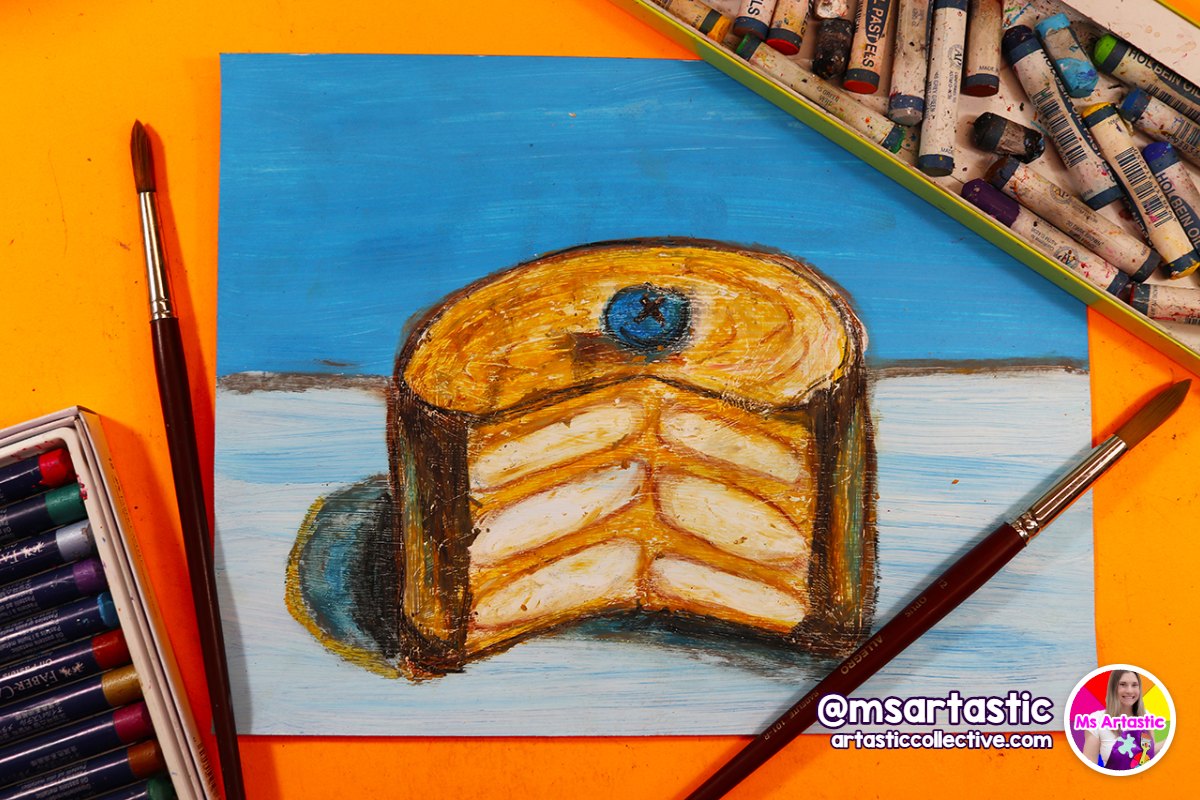
- Wayne Thiebaud. Students paint a slice of cake in Thiebaud's thick, juicy style using oil pastel and acrylic. The lesson includes a reading and a poem about the artist as a hook, a display sign, reflections and artist statements, a rubric and a K.W.L. page.
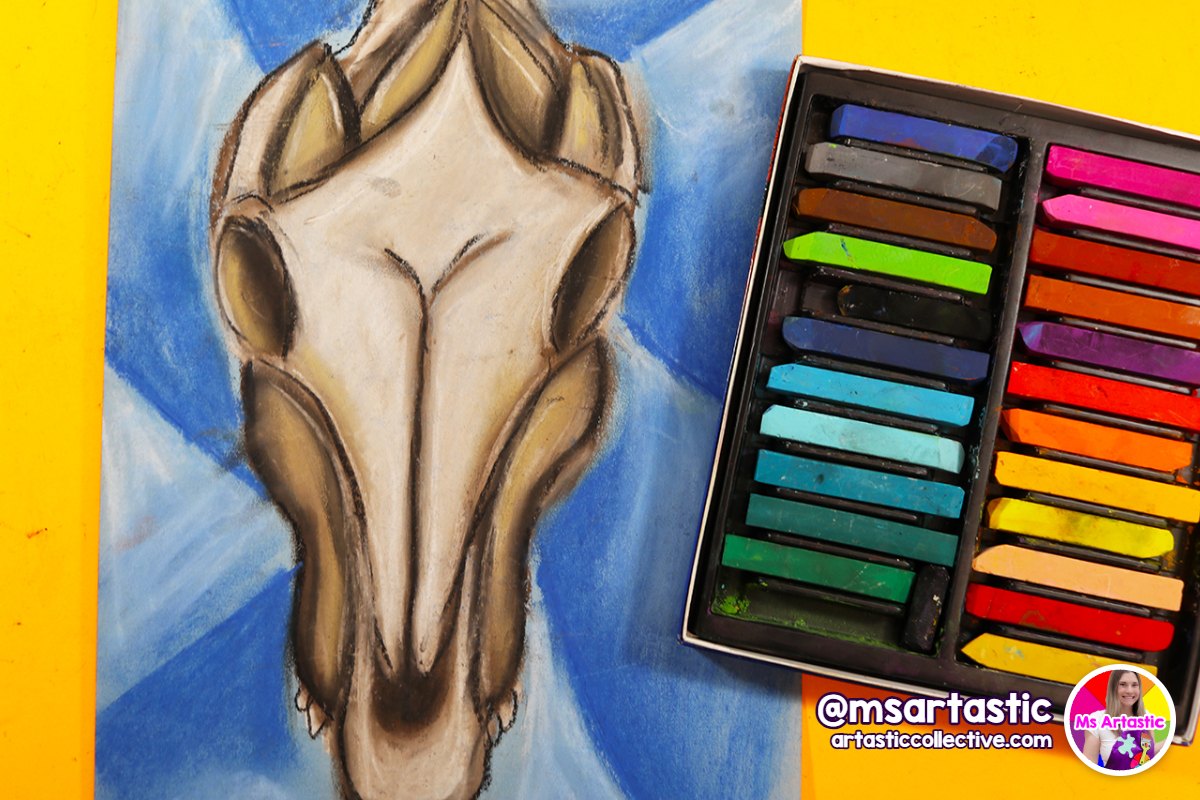
- Georgia O'Keeffe. Her cow skull paintings are a perfect middle school study in emphasis, simplified shapes and bold color. O'Keeffe's abstract work makes a great follow-up for students who love color.
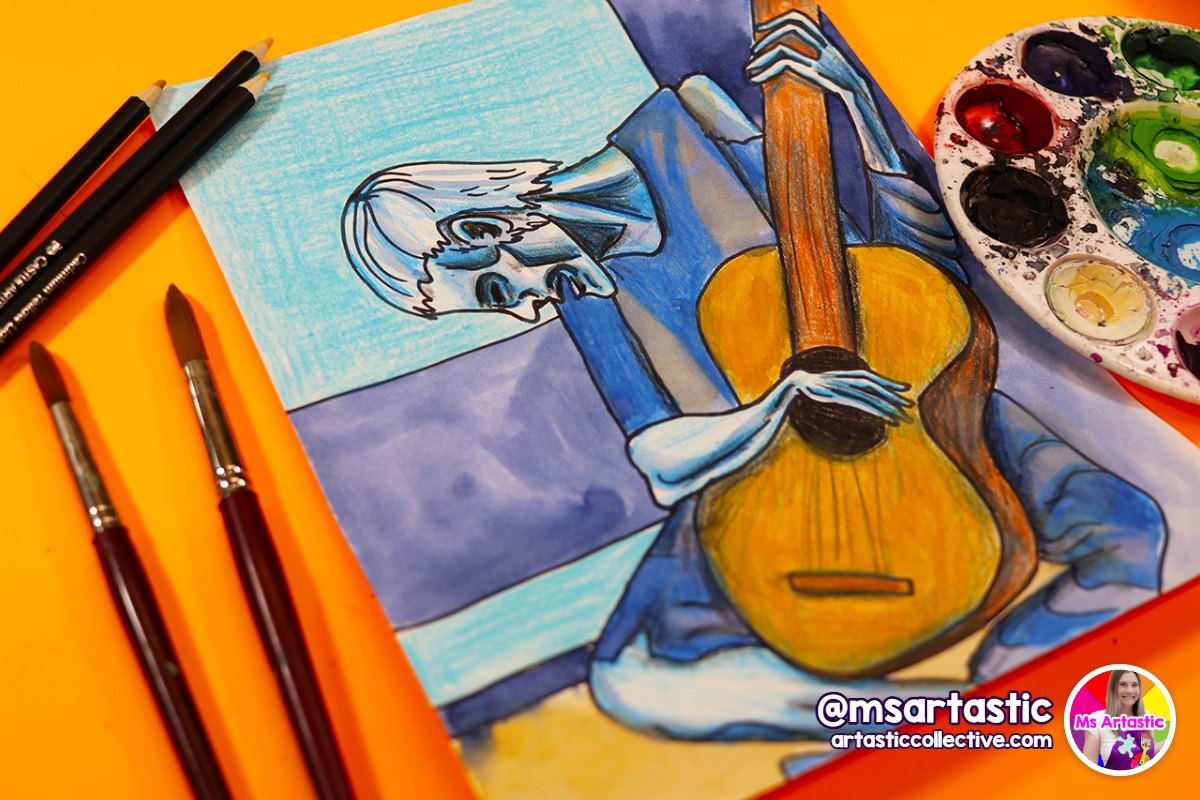
- Pablo Picasso. A Blue Period guitarist lesson is a lovely way to talk about monochromatic color and mood, and why an artist might paint a whole period of work in one color.
- Jean-Michel Basquiat. His energy, symbols and words speak to this age group. A Basquiat-inspired skull lesson pairs well with conversations about identity and voice.
- Salvador Dalí and Surrealism. Surrealist portraits and dreamlike school supplies let students play with imagination while still practicing real drawing skills.
If you would like to try one on its own first, the Georgia O'Keeffe Cow Skull middle school art lesson is available in my shop.
Picture books are not just for little kids
Picture book biographies make fantastic hooks in middle school. They are short, beautifully illustrated and full of the story behind the art, and older students are often surprised by how much they enjoy them. These two pair perfectly with the artist lessons above:

by Javaka Steptoe. The story of young Jean-Michel Basquiat, winner of the Caldecott Medal and the Coretta Scott King Illustrator Award. A great hook before a Basquiat lesson.

by Jen Bryant, illustrated by Bethanne Andersen. A picture book biography of Georgia O'Keeffe, perfect before the cow skull lesson.
A Sample Year of Middle School Art Lessons
One of the hardest parts of teaching middle school art is seeing the whole year at once. Here is a peek at how a Grade 8 year is laid out in the Artastic Collective Year Planner, one lesson a week, with seasonal lessons in their season and the elements, principles, artists and clay spread across the year. These are a few highlights from each part of the year, not the full plan.
- September: back to school with a painted paper collage name art project, then the elements of color and line with a neutral color scheme line landscape.
- October: a color mixing fish, a watercolor pumpkin and some Halloween clay with a ceramic Jack O'Lantern and a ghost tea light.
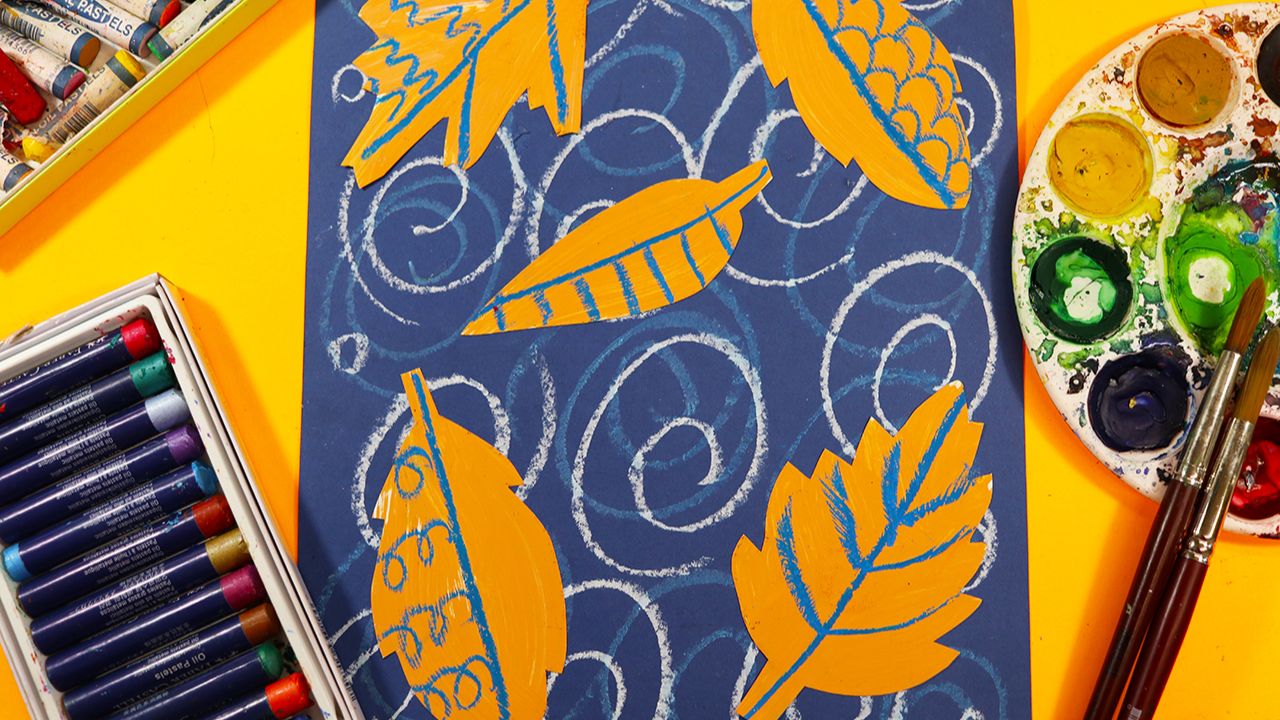
- November: Realism, a charcoal value lesson and a value or ombre leaf for autumn.
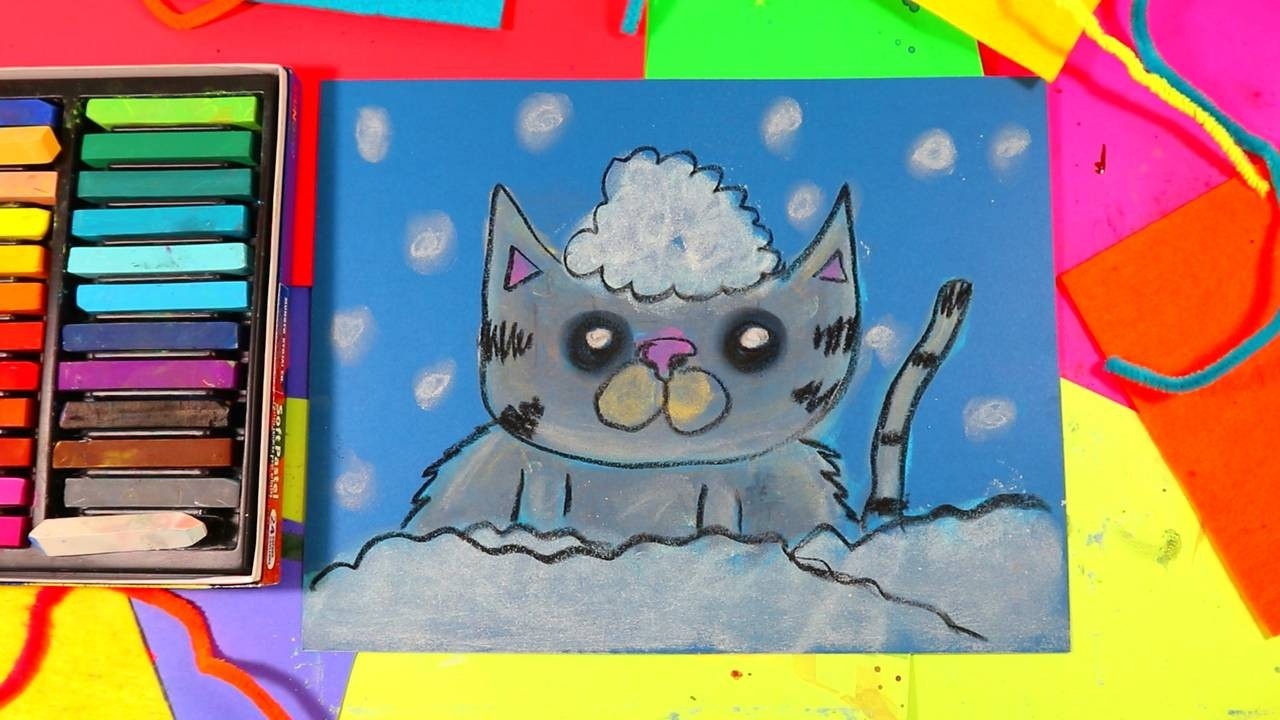
- December and January: Surrealism, ceramic Christmas ornaments, a paper mache winter tree, a chickadee in the snow and a rabbit in the snow.
- February and March: Basquiat, Wayne Thiebaud, rhythm with ladybugs, balance with a bird and feathers, the High Renaissance and a Frida Kahlo inspired lesson.
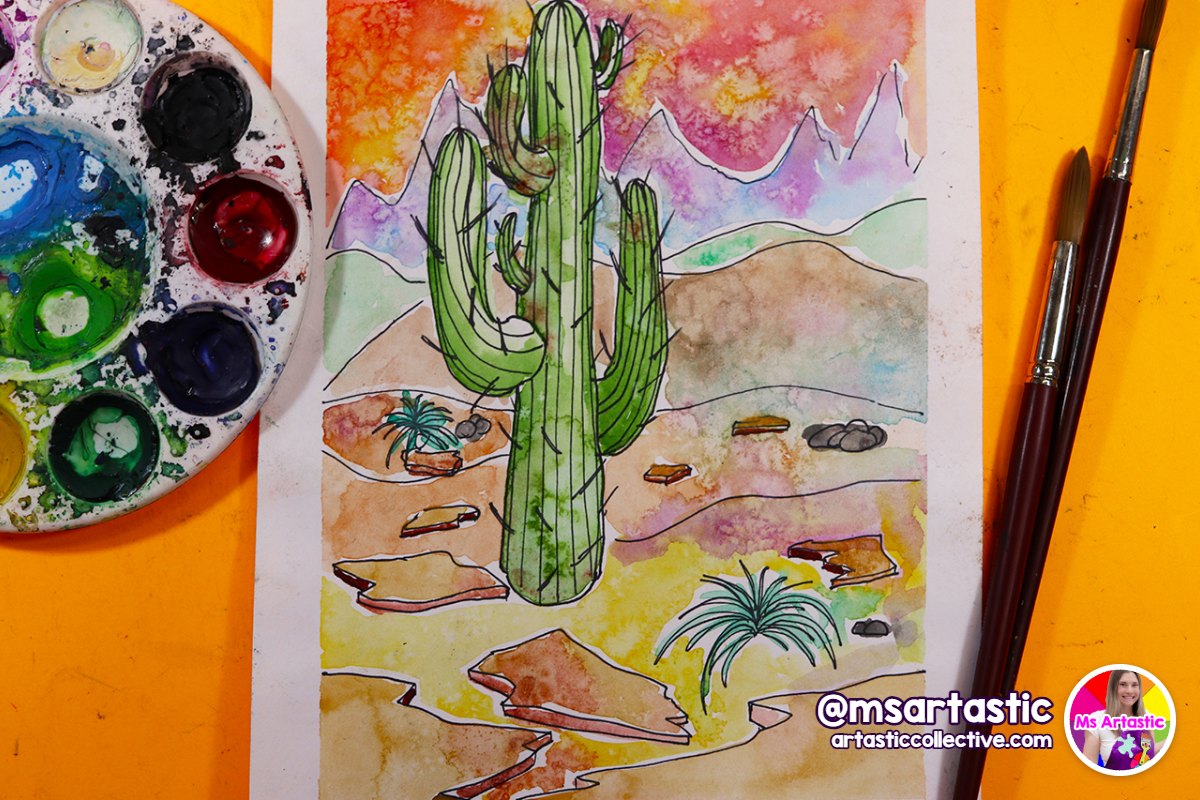
- April to June: movement with a giant squid, unity with sunflowers, a ceramic sea turtle for Earth Day, Matisse, a galaxy painting, a watercolor cactus desert landscape and Abstract Expressionism to finish the year.
Grades 6, 7 and 9 each have their own 36-week plan too, so a student moving from grade 6 to grade 8 meets new lessons every year rather than repeats. Use a plan like this as your starting point, then swap weeks to fit your calendar, your supplies and your students.
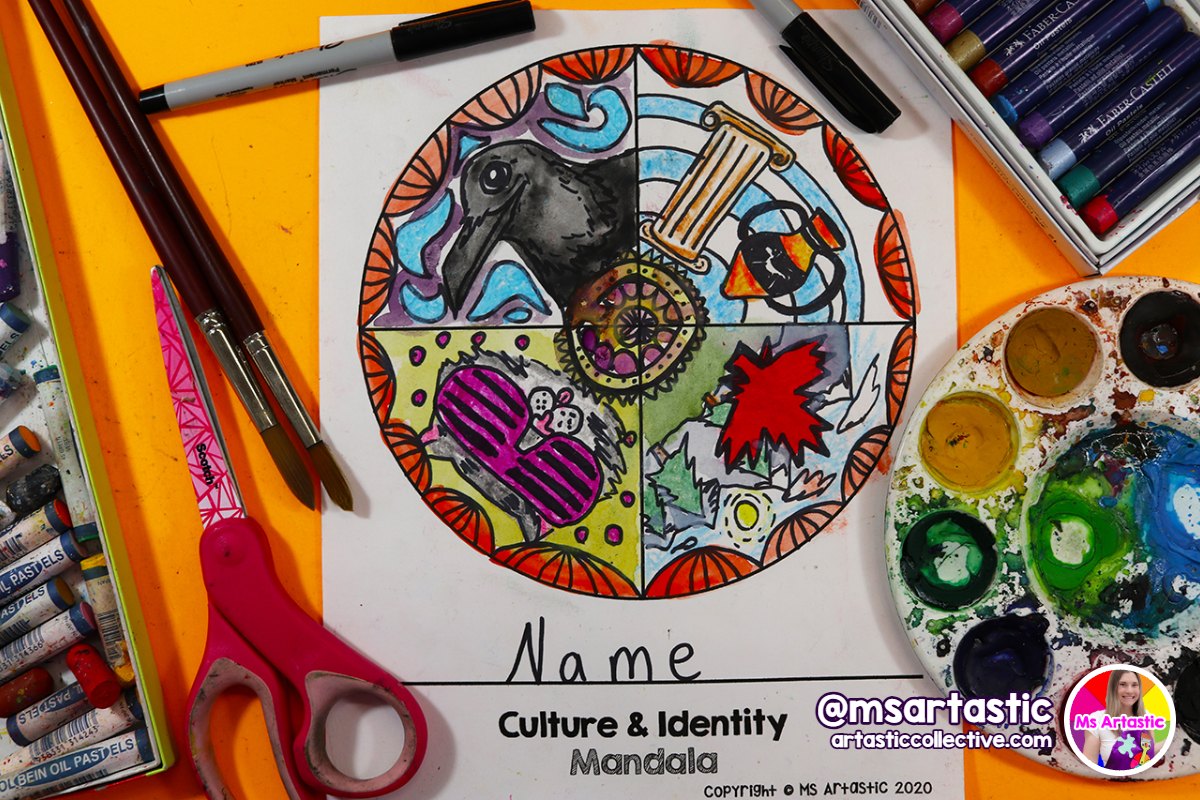
A quick note on social emotional learning: middle school is the perfect time for lessons about identity. The Culture and Identity Mandala lesson, written for grades 5 to 9, invites students to put who they are into symbols, colors and patterns, and it often sparks some of the most thoughtful artist statements of the year.
Explore the Artastic Collective K–9 Art Curriculum
What's Included in Every Artastic Collective Lesson
Middle school teachers often have five or six classes a day, sometimes across several grades, so the materials have to carry a lot of the load. Here is what comes with the lessons inside the Artastic Collective.
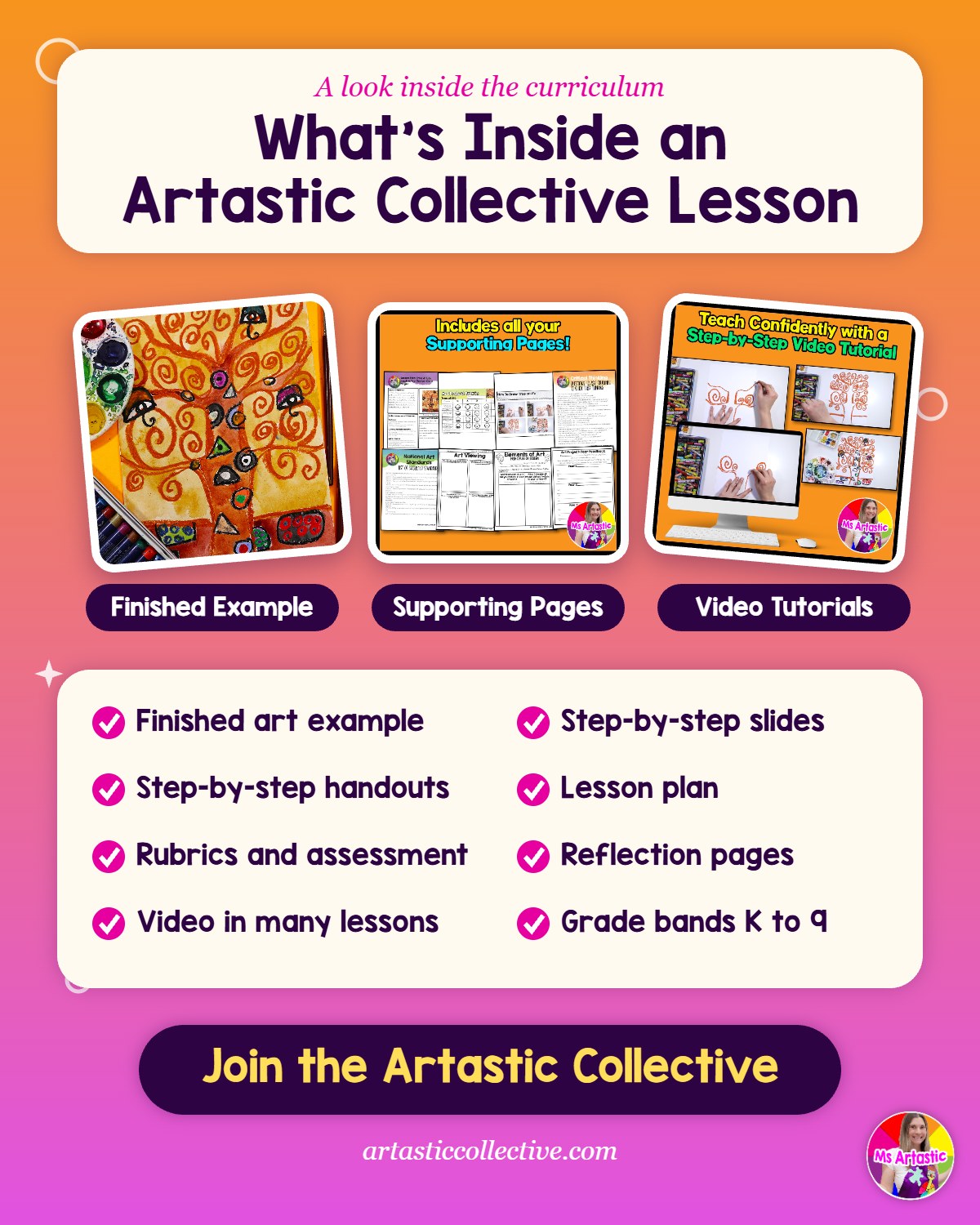
Lessons come with a finished example to show students where they are headed, a lesson plan and step-by-step slides or pages you can project, and many include a rubric, reflection pages and an artist statement. Some middle school lessons go further: the Watercolor Pumpkin lesson for grades 6 to 9, for example, has 26 step-by-step demonstration slides, a drawing handout, a rubric and a two-page lesson plan, and lessons like the Charcoal Mouse list the National Art Standards they connect to. Many lessons also have a full video tutorial. Not every lesson has a video, and each lesson page shows exactly what it includes.
Sketchbooks: The Secret Weapon in Middle School Art
If there is one habit I would build in every middle school art room, it is the sketchbook. Ten minutes at the start of class gets students settled, gives them low-pressure practice and builds the drawing confidence that so many of them lost in upper elementary. It also gives you an easy routine for the first minutes of class while you take attendance.
The key is a good prompt. Open-ended prompts ("draw your shoe from three angles," "design a new planet") work far better than "draw whatever you want," which tends to freeze the very students who need the practice most. I made a free set of 120 Sketchbook Prompt Task Cards for exactly this, and they work for warm-ups and early finishers too.
Get the Free Sketchbook Task Cards
If you want a full sketchbook program for this age group, my Middle School Sketchbook Art Lessons are available on their own in my shop, and a sketchbook program for middle school is also part of the Sketchbooks collection inside the Artastic Collective.
Looking for Free Art Lesson Plans for Middle School?
If you are just starting out, or you want to try my lessons before committing to anything, my Free Art Lesson Library is the easiest place to begin. It has free lessons for back to school, autumn, winter, spring and summer that you can download and teach right away, and joining also adds you to my newsletter, where I share new lessons and teaching ideas.
Get the Free Art Lesson Library
Sub Days and Fast Finishers in Middle School Art
Middle school sub days can go sideways fast if the plan depends on paint, clay or a lot of explaining. The best middle school sub plans are drawing-based, clearly written and interesting enough that students actually do them: value drawing worksheets, art history readings with a drawing response, grid drawings and sketchbook prompts.
Keep a folder of these ready and you will never write a sub plan at 6 a.m. again. My Emergency Art Sub Plans for Middle School are built for exactly that, with art history and value drawing worksheets. The same activities double as fast finisher work, along with sketchbook prompts. Inside the Artastic Collective, theme units like Outer Space also include student workbooks for grades 6 to 8 and a fast finisher.
How to Grade Middle School Art Fairly
Middle schoolers notice fairness, and they also notice when a grade only rewards students who already draw well. A good rubric grades the things every student can control: following the process, trying the technique, using the element or principle of the lesson, and effort and work habits. Natural talent is not on the list.
Pair the rubric with a short reflection or artist statement and you get a much fuller picture of what each student learned. My post on art rubrics and how to grade art fairly walks through a real four-part rubric and a quick marking sheet, and the same approach works well in grades 6 to 8.
Where the Artastic Collective Fits for Middle School Art Teachers
The Artastic Collective is my K–9 art curriculum, and grades 6 to 9 are a real part of it, not an afterthought. Inside you'll find an Elements of Art and Principles of Design collection for grades 6 to 9, artist and art history lessons written for older students, seasonal lessons, clay and sculpture, sketchbook programs and a Year Planner with a 36-week plan for each grade from kindergarten to grade 9. Because it spans K to 9, it also works well for teachers who see several grade levels, and for schools that want one consistent program across the building.
If you would rather browse middle school lessons one at a time, my middle school art lessons page on msartastic.com gathers projects for grades 6 to 8 in one place.
Middle School Art Lessons FAQ
What should middle school students learn in art?
By grades 6 to 8, students should be using the elements of art and principles of design on purpose, practicing real techniques like shading, color mixing and watercolor layering, learning about artists and art history, and reflecting on their own work. A balance of skill-building, choice and meaning keeps them engaged.
How long should a middle school art project take?
Most middle school art projects take two to four class periods, depending on the medium and your period length. Painting and clay projects need drying time, so plan a sketchbook or reflection task for the days in between.
How do I get reluctant middle schoolers to participate in art?
Teach a clear technique first so students have a method, give them real choices in subject and color, grade the process rather than talent, and use daily low-pressure sketchbook practice. Confidence usually follows small successes.
Are there free art lesson plans for middle school?
Yes. My Free Art Lesson Library has free seasonal lessons you can download right away, and the free 120 Sketchbook Prompt Task Cards work well as middle school warm-ups and fast finisher activities.
Can I use one art curriculum for grades 6 to 9?
Yes. The Artastic Collective covers kindergarten to grade 9, with lessons written for grades 6 to 9 and a separate 36-week plan for each grade, so students meet new lessons as they move up.
You've Got This
Teaching middle school art is a gift. These are the years when students decide whether art is "for them," and a thoughtful lesson, a little choice and an encouraging word can change that answer. Start with one strong structure, a good sketchbook routine and a few lessons that teach real skills, and build from there.
When you are ready to stop planning from scratch, the Artastic Collective has your whole middle school art year ready to teach.
Learn More About the Artastic Collective
Want to start for free?
Get the Free Art Lesson Library
Happy creating,
Kathleen (Ms Artastic)
This post contains affiliate links. As an Amazon Associate I earn from qualifying purchases.
Discover FREE Art Lessons & Resources
Let's Make Some Art! I will create the Art Lessons & Resources, you inspire the kids!
Stay connected with news and updates!
Join our mailing list to receive the latest news and updates from our team.
Don't worry, your information will not be shared.
We hate SPAM. We will never sell your information, for any reason.
Ms Artastic