Types of Lines Art Lesson for Pre-K, Kindergarten, and 1st Grade
Jun 14, 2026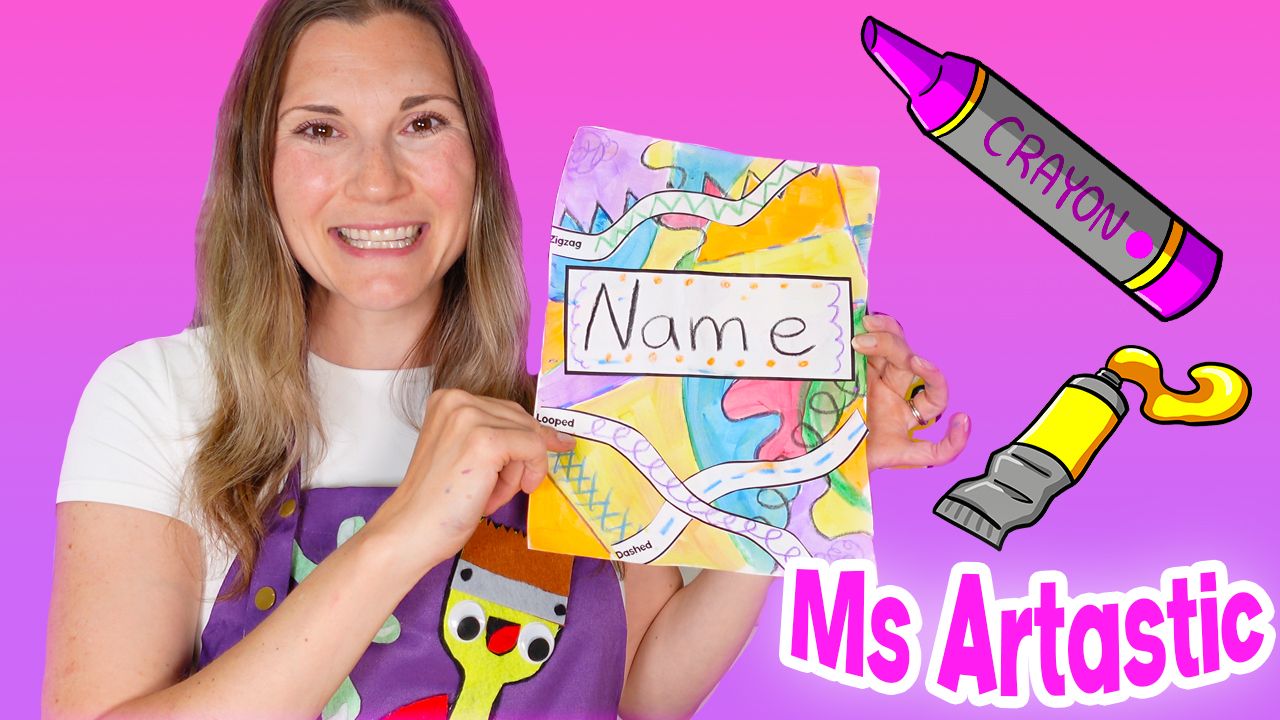
Types of Lines Art Lesson for Pre-K, Kindergarten, and 1st Grade
Teaching young students about types of lines is one of the simplest and most powerful ways to begin building creative confidence. Before students are ready to create detailed drawings, paintings, patterns, designs, and more advanced artworks, they need to understand one of the most important building blocks in art: line.
And for Pre-K, Kindergarten, and 1st Grade students, line is the perfect place to start.
A line can be straight. A line can be wavy. A line can zigzag, curve, loop, swirl, dash, bounce, wiggle, crawl, stretch, and dance across the paper. Lines are playful. Lines are approachable. Lines are something every young artist can make, even if they are still developing fine motor skills or feeling unsure about drawing.
That is why a types of lines art lesson is such a beautiful early art experience. It helps children understand that art does not begin with a perfect picture. Art begins with marks. Art begins with trying. Art begins with one little line.
And once children realize they can make lines, they begin to realize they can make art.
Watch the Free Types of Lines Art Lesson Video
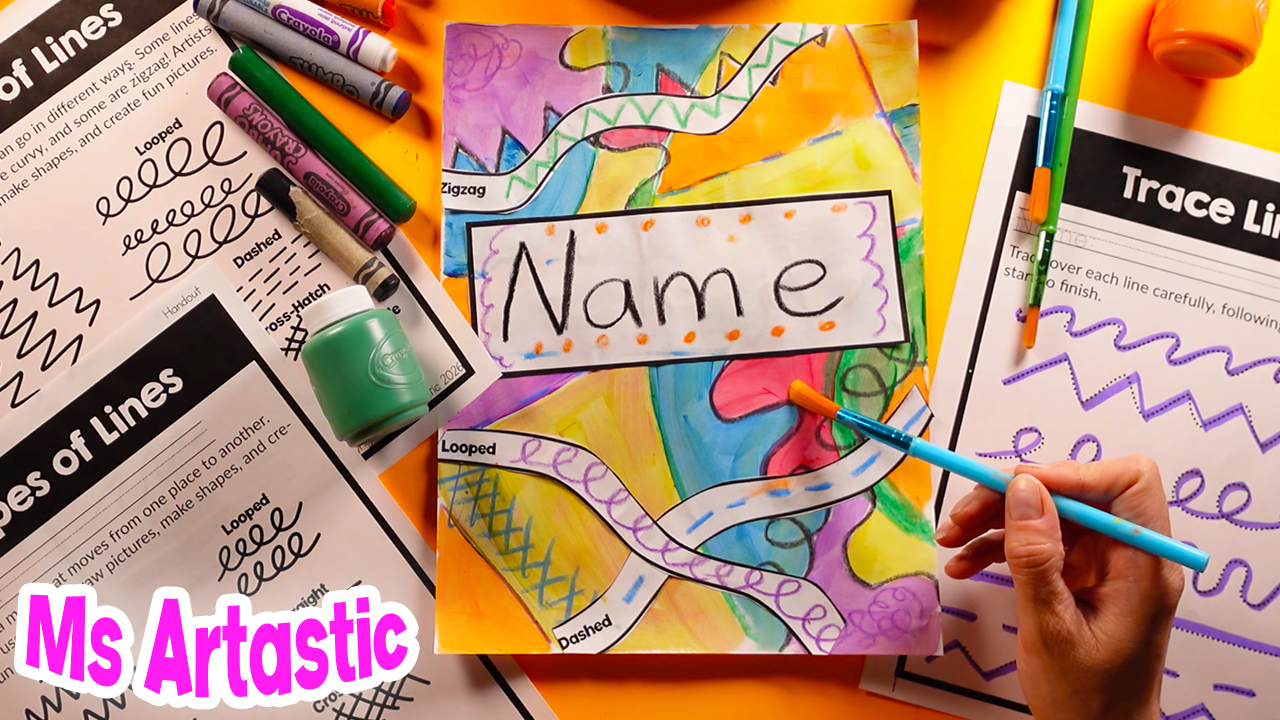
To help introduce this concept to young learners, I created a Types of Lines Art Lesson for Pre-K, Kindergarten, and 1st Grade video on the Ms Artastic YouTube channel. This video is designed to support little artists as they learn different types of lines in a simple, friendly, and visual way.
Students can watch the video, follow along, practice making lines, and begin exploring how artists use lines to create drawings and designs. This makes it a helpful resource for art teachers, classroom teachers, homeschool families, and educators using the Artastic Collective Art Curriculum.
You can watch the free video lesson here:
CLICK HERE TO WATCH THE TYPES OF LINES ART LESSON VIDEO
The video is a great way to introduce the lesson because young students often learn best when they can see the line, hear the word, move their hand, and then try making the line themselves.
That multi-sensory connection is so important for early art learning.
Why Line Is a Perfect First Art Concept for Young Learners
The element of art line is one of the first concepts I love teaching to young artists because it is so accessible. Students do not need advanced drawing skills to begin. They do not need to know how to make a realistic picture. They simply need to explore how different lines move.
For early learners, this is huge.
A line art lesson for Pre-K and Kindergarten supports so many developmental skills at once. Students practice fine motor control as they move crayons, markers, pencils, or paint sticks across the page. They build vocabulary as they learn words like straight, curved, wavy, zigzag, spiral, dashed, bumpy, and looping. They develop visual awareness as they notice lines in artwork and in the world around them. They also begin to understand that different lines can look and feel different.
A zigzag line might feel sharp and energetic.
A wavy line might feel calm and flowing.
A spiral line might feel playful.
A dashed line might look like a road, a path, or little jumping marks.
This is where students begin thinking like artists. They are not just copying. They are noticing, naming, moving, choosing, and creating.
Types of Lines to Teach in Pre-K, Kindergarten, and 1st Grade
When teaching types of lines to young students, it helps to keep the vocabulary simple and visual. You can always expand the learning later, but at the beginning, students need line words they can recognize, say, and draw.
Some wonderful types of lines to introduce include straight lines, curved lines, wavy lines, zigzag lines, spiral lines, dashed lines, bumpy lines, and looping lines.
These line types are easy to connect to real-life examples. A straight line might be a road, a table edge, or a pencil. A curved line might be a smile or rainbow. A wavy line might be water. A zigzag line might be lightning or mountains. A spiral line might be a snail shell or lollipop. A dashed line might be a trail or road on a map.
When children can connect art vocabulary to things they already understand, the learning becomes much stronger.
And yes, if a student tells you their zigzag line is monster teeth or dinosaur spikes, that is absolutely creative thinking and we are here for it.
How to Introduce a Types of Lines Lesson
A strong types of lines art lesson for young learners should begin with movement and visuals. Little artists need to experience the concept before they are expected to draw it neatly on paper.
You might start by asking students, “What is a line?” Then explain that a line is a mark that moves. It can move across the page in different ways.
Before students draw, invite them to make lines in the air with their fingers. They can make a straight line from side to side, a wavy line like water, a zigzag line like lightning, a spiral line that curls around and around, or a looping line like a roller coaster.
This kind of movement helps Pre-K and Kindergarten students connect the word to the action. It also gets their whole body involved before they begin using smaller hand movements on paper.
Then you can show the video lesson, pause as needed, and give students time to practice each type of line.
Make Line Learning Playful
Young students learn best through play, repetition, and connection. A line lesson does not need to feel like a formal lecture. It should feel like an invitation to explore.
You can ask students to go on a line hunt around the classroom or homeschool space. Look for straight lines on tables, curved lines on cups, wavy lines in patterns, zigzag lines in clothing, spiral lines in toys, or dashed lines in books.
You can also connect lines to movement. Students can stand tall like a straight line, wiggle like a wavy line, make their arms into a zigzag, or curl their fingers into a spiral.
This helps students understand that lines are not just something artists use on paper. Lines are everywhere.
Once students begin noticing lines in the world, they start seeing art in a new way.
A Simple Types of Lines Art Activity
After students watch the video and practice the line vocabulary, they can begin creating their own line artwork.
Give each student a piece of paper and simple drawing tools such as crayons, markers, pencils, or colored pencils. Students can practice drawing different lines across the page. They might fill sections with straight lines, wavy lines, zigzag lines, spiral lines, dashed lines, and looping lines.
Then invite students to turn some of their lines into pictures or patterns.
A wavy line can become water.
A spiral can become a snail shell.
A zigzag can become a crown, mountain, lightning bolt, or monster teeth.
A curved line can become a rainbow, smile, or bridge.
A dashed line can become a trail.
This gives students a chance to see that lines are the beginning of drawings. They are not random. They can become ideas.
For young artists, that realization is so exciting.
Using This Lesson in the Art Room
For art teachers, a types of lines art lesson is perfect for the beginning of the year or the start of an elements of art unit. It gives students a strong foundation while also helping you observe their drawing confidence, fine motor skills, vocabulary, and ability to follow directions.
This lesson can also help introduce basic art room routines. Students can practice getting materials, listening to a demonstration, using drawing tools, naming their artwork, sharing materials, cleaning up, and storing their work.
That makes this lesson especially useful for back to school art with young students. You are not only teaching line. You are helping students learn how art class works.
And because it uses simple materials, it is manageable, low-stress, and perfect for little learners who are still building classroom stamina.
Using This Lesson in the Classroom
For classroom teachers, this is a wonderful way to include meaningful art without needing a full art background. You do not need to be an expert artist to teach line. In fact, line is one of the most approachable art concepts for young children.
This lesson supports visual art, but it also connects beautifully to early literacy and fine motor development. Students practice vocabulary, directional movement, pre-writing marks, hand control, and patterning. They are learning how to make marks with intention.
You can use this lesson during back to school, centers, morning work, Fun Friday, early finishers, or as part of a unit on shapes, patterns, or creativity.
The video makes it easy to introduce the concept, and the full lesson plan inside the Artastic Collective Art Curriculum gives you the additional structure and resources to make the lesson feel complete.
Using This Lesson for Homeschool
For homeschool families, a types of lines art lesson is a gentle and flexible way to begin art with young children. It is easy to adapt for preschoolers, kindergarteners, 1st graders, or mixed-age siblings.
You might watch the video together, practice lines in the air, draw lines on paper, create lines with sidewalk chalk, or even build lines with yarn, playdough, pipe cleaners, or craft sticks. This makes the lesson hands-on and playful.
A preschooler may focus mostly on mark-making and movement. A kindergartener may begin naming and copying different line types. A 1st grader may start using lines to create patterns, drawings, and designs.
That is the beauty of this kind of lesson. It can grow with the child.
Grab the Full Lesson Plan Inside the Artastic Collective Art Curriculum
The YouTube video is a wonderful way to introduce the lesson, but if you want the complete teacher-ready resource, you can access the full Types of Lines Art Lesson inside the Artastic Collective Art Curriculum with your enrollment.
The full lesson plan gives you the structure and support you need to teach the lesson with confidence. Instead of trying to piece everything together yourself, you can use the included curriculum materials to guide your students through the concept of line in a clear and meaningful way.
You can learn more about joining the Artastic Collective Art Curriculum here:
CLICK HERE TO JOIN THE ARTASTIC COLLECTIVE ART CURRICULUM
Inside the curriculum, lessons like this are designed to help make teaching art feel more organized, more manageable, and more joyful. Whether you are an art teacher, classroom teacher, or homeschool educator, having ready-to-use lessons can save time and help you bring meaningful visual art learning to your students.
Why the Full Lesson Plan Helps
A complete lesson plan can make such a difference, especially when teaching early learners. Young students need visuals, repetition, vocabulary support, clear steps, and developmentally appropriate activities. Having those pieces ready helps you focus on teaching instead of scrambling to build everything from scratch.
The full Types of Lines Art Lesson can help you introduce the element of art line, teach different types of lines, support young students with structured practice, guide students through a line art project, and connect the lesson to early art vocabulary and creative confidence.
It is especially helpful for Pre-K art, Kindergarten art, 1st Grade art, back to school art, homeschool art, and early elements of art instruction.
This is the kind of lesson that may look simple on the surface, but it builds a foundation students will use all year long.
Tips for Teaching Lines to Pre-K and Kindergarten
When teaching types of lines to Pre-K and Kindergarten students, keep the experience playful and gentle. Young artists are still developing control, so their lines may look wobbly, uneven, oversized, tiny, dramatic, or completely different from the example.
That is okay.
Actually, that is exactly where they are supposed to be.
Encourage students to try each type of line without worrying about perfection. Remind them that artists practice. Say the vocabulary out loud often. Show the line, move the line, draw the line, and then invite students to make their own version.
You can also use big movements before small ones. Drawing a wavy line in the air is easier than drawing one neatly on paper. Once students understand the movement, they can try it with a drawing tool.
The goal is confidence, not perfection.
Tips for Teaching Lines to 1st Grade
For 1st Grade art, students may be ready to use lines more intentionally. They can begin creating patterns, borders, textures, and simple compositions using the different types of lines they learned.
You might challenge students to combine line types, repeat lines to make patterns, fill shapes with lines, or create a picture using only lines. They can also start thinking about how lines can show feeling or movement.
A zigzag line might feel energetic.
A curved line might feel gentle.
A spiral might feel playful.
A dashed line might feel like movement or travel.
This helps students begin understanding that artists make choices on purpose. Lines are not only marks. They can communicate ideas.
Extend the Lesson With Line Activities
Once students understand the basic line types, you can extend the lesson in many simple ways.
Students can make a line pattern page, create a line monster, design a line rainbow, make a line landscape, invent a road map, or create a collaborative line mural. They can build lines with loose parts, trace lines in sand, paint lines with water on the sidewalk, or use yarn to create different line types.
You can also connect line to music. Play different types of music and ask students what kind of line the music sounds like. Fast music might inspire zigzags. Slow music might inspire wavy lines. Silly music might inspire loops and spirals.
This helps students understand that line can show movement, rhythm, and feeling.
And once students begin seeing lines this way, their artwork becomes more expressive.
Why This Lesson Supports the Bigger Curriculum
A types of lines art lesson may be one of the first lessons young students complete, but it connects to so much future learning. Line is used in drawing, painting, collage, printmaking, design, pattern, texture, writing, and visual storytelling.
When students understand different types of lines, they are better prepared to draw shapes, create patterns, add details, design backgrounds, and express movement. They also begin building vocabulary they will continue using in future art lessons.
This is why early art concepts matter.
A simple line lesson becomes the foundation for more complex creativity later.
Artastic Collective Makes Art Teaching More Manageable
One of the goals of the Artastic Collective Art Curriculum is to help teachers and homeschool educators feel supported with ready-to-use art lessons that are creative, meaningful, and easy to teach.
Instead of searching all over the internet for lesson ideas, writing every plan from scratch, and wondering what to teach next, you can use curriculum resources that are already designed to support student learning and creative growth.
The Types of Lines Art Lesson is one example of how the curriculum helps build foundational art skills in a way that feels age-appropriate, engaging, and teacher-friendly.
If you want access to the full lesson plan and the growing collection of art curriculum resources, you can learn more here:
CLICK HERE TO JOIN THE ARTASTIC COLLECTIVE ART CURRICULUM
Final Thoughts
A Types of Lines Art Lesson is a beautiful starting point for Pre-K, Kindergarten, and 1st Grade students because it helps them understand that art begins with simple marks. Students practice fine motor skills, build art vocabulary, explore movement, create patterns, and begin seeing themselves as artists.
Whether you are teaching in an art room, classroom, or homeschool space, this lesson is simple, meaningful, and wonderfully accessible for young learners.
You can start by watching the free YouTube video here:
And if you want the full teacher-ready lesson plan, you can access it inside the Artastic Collective Art Curriculum with your enrollment.
CLICK HERE TO JOIN THE ARTASTIC COLLECTIVE ART CURRICULUM
Teaching art does not have to feel overwhelming. With the right support, even the simplest lesson can become a powerful creative foundation for young artists.
Sincerely,
Ms Artastic
Discover FREE Art Lessons & Resources
Let's Make Some Art! I will create the Art Lessons & Resources, you inspire the kids!
Stay connected with news and updates!
Join our mailing list to receive the latest news and updates from our team.
Don't worry, your information will not be shared.
We hate SPAM. We will never sell your information, for any reason.
Ms Artastic