Line Lizard Art Lesson for Grade 1 | Artastic Collective Art Curriculum
Jul 13, 2026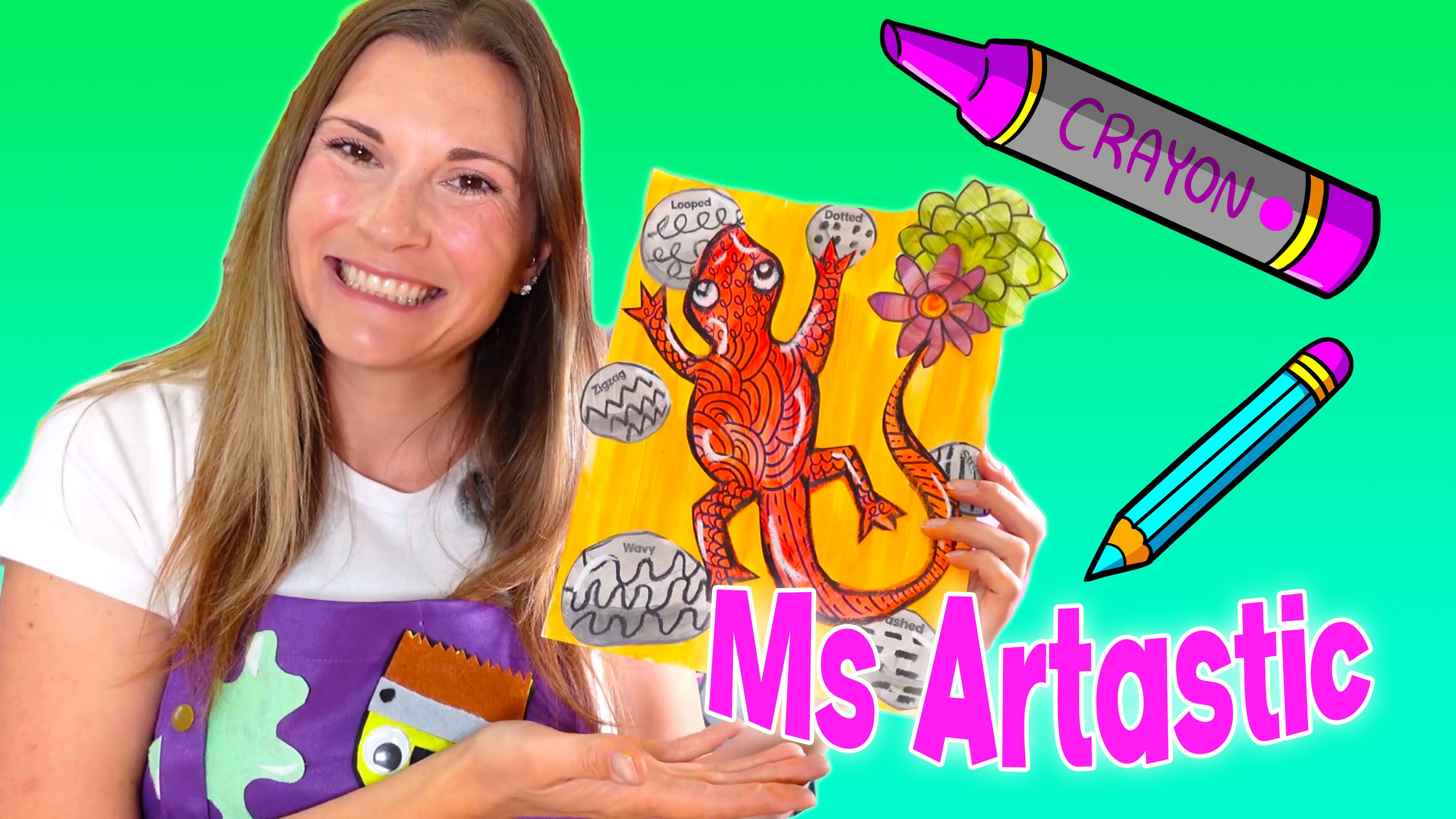
Line Lizard Art Lesson for Grade 1: Exploring the Element of Art Line
Teaching the element of art line in Grade 1 is such a wonderful way to help young artists begin seeing their marks as creative choices. At this age, students are moving beyond simple mark-making and beginning to understand that the lines they draw can make shapes, patterns, textures, movement, and details. A line is not just a line anymore. It can become the edge of a lizard’s body, a pattern on a tail, the texture on a rock, or a design that makes an artwork feel full of personality.
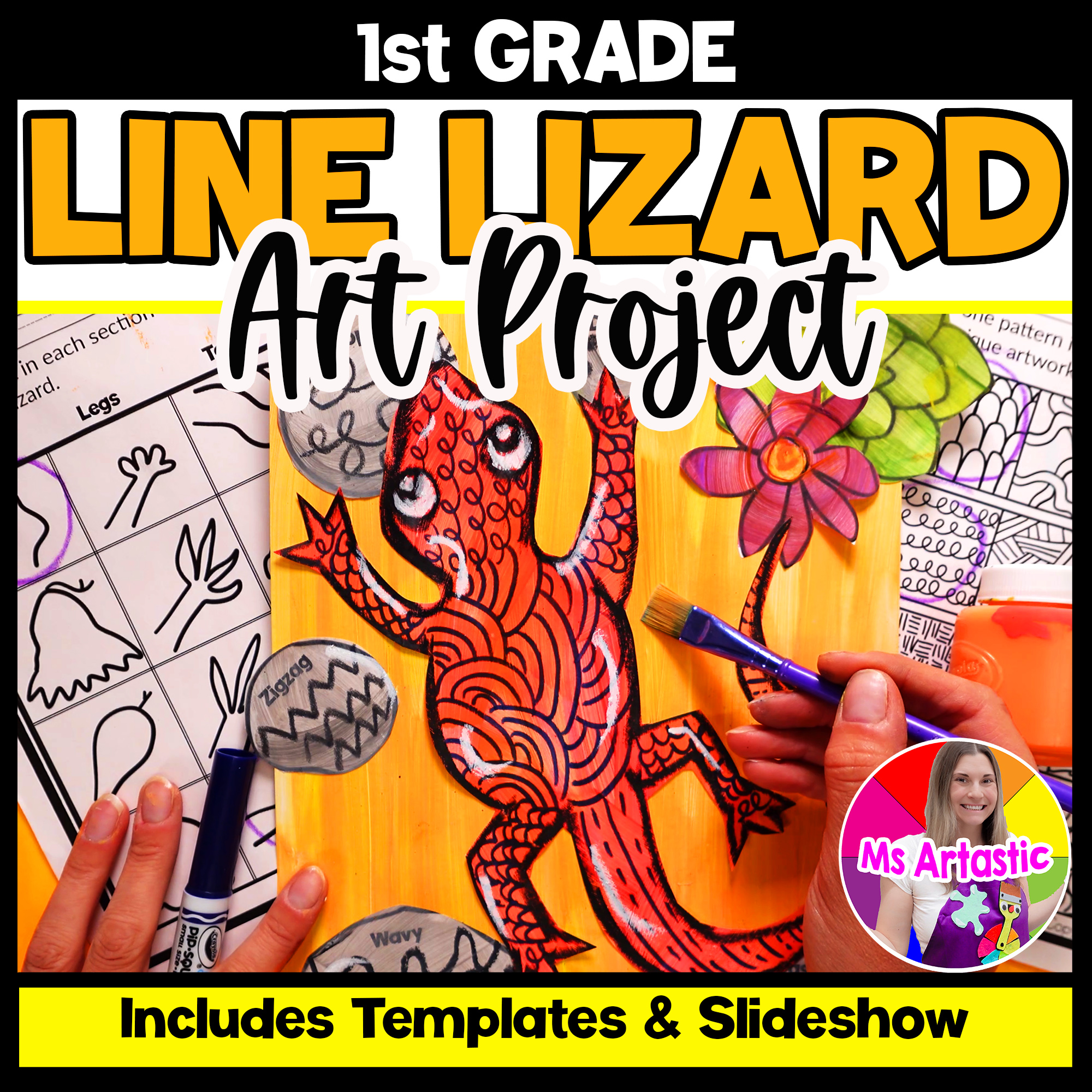
This Line Lizard Art Lesson for Grade 1 is a playful and colourful way to introduce students to different types of lines while helping them create a finished artwork they can feel proud of. Students explore straight lines, curved lines, wavy lines, zigzag lines, dashed lines, loopy lines, thick lines, thin lines, and patterned lines as they design a lizard artwork full of movement, texture, and creative choice.
I love this lesson because it supports foundational art learning while still feeling fun and imaginative. Students are not just practicing line vocabulary in isolation. They are using lines to build a lizard, decorate the body, add texture, create pattern, and make choices that help their artwork feel unique.
That is exactly the kind of learning I want young artists to experience. It is structured enough to teach a real art concept, but open enough that each student’s artwork can feel like their own.
Watch the Line Lizard Art Tutorial
I created a video tutorial for this lesson so students can see the artwork come together step by step. You can use the video as a visual introduction, a whole-class demonstration, a homeschool art lesson, or a helpful support before students begin creating.
CLICK HERE TO WATCH THE LINE LIZARD ART TUTORIAL
The video is a great way to introduce the project visually, but the full lesson inside the Artastic Collective Art Curriculum gives you the complete teaching support, classroom-ready PDF lesson plan, student handouts, templates, reflection pages, and extension activities so you can teach the lesson with more confidence and less planning stress.
Why Line Is So Important in Grade 1 Art
Line is one of the basic elements of art. A line is a mark that moves from one place to another, and artists use lines to draw pictures, make shapes, create patterns, show movement, add texture, and include details in their artwork.
For Grade 1 students, learning about line helps build art vocabulary, observation skills, drawing confidence, and creative decision-making. Students begin to understand that lines can move in many different ways and that each type of line can make an artwork look or feel different.
A wavy line can feel calm, flowing, or gentle. A zigzag line can feel sharp, energetic, or exciting. A curved line can feel soft. A thick line can feel bold. A thin line can feel delicate. A dashed line can feel broken, playful, or rhythmic. A loopy line can feel lively and fun.
When students learn to recognize and use these different lines, they begin to see art as a series of choices. They are not only asking, “What do I draw?” They are beginning to ask, “What kind of line could I use here?” That is a powerful shift for young artists.
What Students Learn in the Line Lizard Art Lesson
In this Line Lizard Art Project, students learn how artists use line to create patterns, texture, movement, and details. They practice drawing, painting, cutting, gluing, arranging, and designing while creating a colourful lizard artwork.
The lesson introduces important vocabulary such as line, straight, curved, wavy, zigzag, dashed, loopy, thick, thin, pattern, texture, movement, detail, and artwork. These words become part of the student’s growing art language and can be used again in future lessons.
Students also get to make creative choices throughout the project. They can use a lizard template or design their own lizard using the Build-a-Lizard page. They can choose the head, legs, tail, and eyes. They can also use the Pick-a-Pattern page to select line patterns for different parts of the lizard’s body.
This makes the project feel personal. Students are supported by the structure of the lesson, but they are still making decisions. That balance is so important in early elementary art because young artists need guidance, but they also need ownership.
Mediums and Materials Needed
For this lesson, students use oil pastels or wax crayons, cardstock or thicker paper, tempera paint, paintbrushes, water, scissors, and glue.
The materials are flexible, so you can use what you already have available in your classroom or homeschool space. Wax crayons or oil pastels are especially helpful because students can use them to draw line patterns and details, then paint over them to create a wax-resist effect.
This gives students a hands-on way to see how materials interact while also practicing different types of lines.
Line Lizard Art Tutorial
To begin, students create painted papers that will become the background and lizard pieces. One piece of sturdy white paper can be painted with warm, earthy, brown, or neutral colours to create a background. Another paper can be painted in a chosen lizard colour. If students are using the lizard template, they can paint directly on it. If they are designing their own lizard, they can paint a blank paper and let it dry before drawing their lizard on top.
While the painted papers dry, students can work on extra cut-and-glue pieces such as rocks and flowers. This is a wonderful opportunity to practice line texture. Students can draw different types of lines on the rocks using black wax crayon or oil pastel before painting them. They might use zigzag lines, dashed lines, dotted lines, looped lines, wavy lines, straight lines, thick lines, or thin lines. This helps students connect line vocabulary to texture and visual detail.
Once the lizard paper is dry, students create their lizard. They can cut out the template or design their own lizard using the Build-a-Lizard page. Students choose a head style, legs, tail, and eyes, then add line patterns to different parts of the lizard using the Pick-a-Pattern page for inspiration. These patterns can be drawn with markers, crayons, coloured pencils, wax crayons, or oil pastels in contrasting colours so the line designs stand out.
To finish the artwork, students cut out the lizard, rocks, and flowers, then arrange and glue everything onto the painted background. They can place the rocks and flowers first, then add the lizard as the main focus of the composition. Once everything is glued down, students can sign their artwork and display it. The finished piece is a colourful lizard artwork full of line, pattern, texture, and creative personality.
How This Lesson Supports Art Curriculum Planning
Inside a Grade 1 art curriculum, students need repeated opportunities to explore foundational art concepts in ways that feel age-appropriate and engaging. Line is one of those concepts students will return to again and again, so it helps to teach it through projects that feel memorable.
This Line Lizard Art Lesson gives students a strong experience with line because they are using the concept in multiple ways. They practice line vocabulary, draw line patterns, create texture, decorate a lizard, and use lines as part of the final artwork.
It also supports other important early art skills. Students experiment with materials, build fine motor control, cut and glue shapes, make composition choices, and describe how line is used in their artwork.
This makes the lesson more than a cute lizard project. It becomes a meaningful art experience that supports creative growth.
Literacy, Reflection, and Extension Activities
The full lesson inside the Artastic Collective Art Curriculum includes more than the project tutorial. It also includes reading, writing, and reflection supports that help students connect art with language and thinking.
Students can read about line in art and respond to questions about what a line is, how artists use lines, and what kind of line they might use to show movement. They can use a sight word tracking list, a word bank of tricky vocabulary, a spelling list, and writing prompts connected to line and lizards.
The lesson also includes reflection pages where students can think about what they liked, what was challenging, how their artwork makes them feel, and what they learned from creating it. These reflection pieces help students begin talking about their creative process and using art vocabulary to describe their choices.
This is especially helpful for Grade 1 because students are still learning how to explain their thinking. Even a simple sentence like, “I used zigzag lines on the tail because they looked exciting,” shows that the student is beginning to connect art vocabulary with artistic choice.
Included in the Artastic Collective Art Curriculum
If you are already a member of the Artastic Collective Art Curriculum, this Line Lizard Art Lesson for Grade 1 is already included for you inside your membership.
You can log in, access the full lesson, and use it with your students as part of your Grade 1 art curriculum planning. Inside the membership, you will have access to the full lesson plan, tutorial support, student handouts, templates, reflection activities, and classroom-ready materials.
The Artastic Collective is designed to help teachers and homeschool families feel more organized, supported, and confident when teaching art. Instead of piecing together random projects from all over the internet, you can access lessons that are built around meaningful art concepts, developmental stages, creative skill-building, and classroom needs.
CLICK HERE TO JOIN THE ARTASTIC COLLECTIVE
Because teaching art should feel inspiring and doable, not like you are building an entire curriculum from scratch while trying to remember which student put the glue stick in the paint tray.
Want Just This Lesson Plan?
If you are not looking for the full Artastic Collective membership right now and would rather grab this individual lesson, you can get the Line Lizard Art Lesson in the Ms Artastic Store.
CLICK HERE TO GRAB THE LINE LIZARD ART LESSON
This is a great option if you only need this one lesson for your classroom, homeschool, early elementary art plans, or an upcoming line unit.
A Creative Line Art Lesson for Grade 1
This Line Lizard Art Lesson is a fun and meaningful way to teach Grade 1 students about the element of art line. Students learn that lines can move in many ways, create patterns, add texture, show movement, and make artwork more interesting.
They also get to create a lizard full of colour, pattern, and personality, which makes the learning feel joyful and memorable.
You can watch the video tutorial here:
CLICK HERE TO WATCH THE LINE LIZARD ART TUTORIAL
If you want this lesson as part of a growing art curriculum membership with full teaching support, you can join the Artastic Collective here:
CLICK HERE TO JOIN THE ARTASTIC COLLECTIVE
Or, if you would rather grab just this individual lesson plan, you can get it in the Ms Artastic Store here:
CLICK HERE TO GRAB THE LINE LIZARD ART LESSON
I hope this lesson brings lots of line, colour, creativity, and lizardy little personality into your classroom or homeschool.
Sincerely,
Ms Artastic
Discover FREE Art Lessons & Resources
Let's Make Some Art! I will create the Art Lessons & Resources, you inspire the kids!
Stay connected with news and updates!
Join our mailing list to receive the latest news and updates from our team.
Don't worry, your information will not be shared.
We hate SPAM. We will never sell your information, for any reason.
Ms Artastic