Line Leopards Art Lesson for 3rd Grade | Artastic Collective Art Curriculum
Aug 07, 2026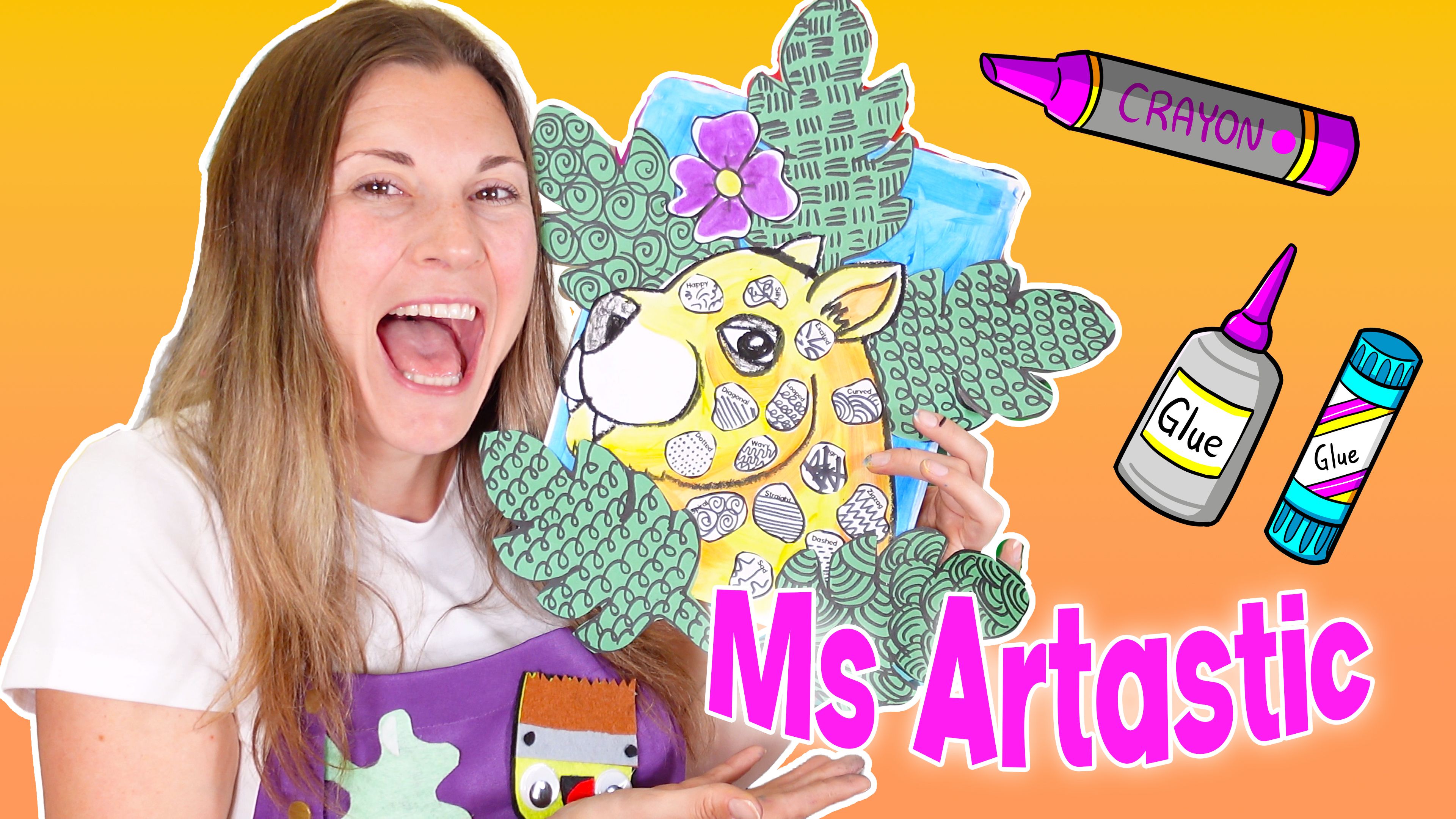
Teach 3rd grade students about types of lines with a bold Line Leopards Art Lesson included in the Artastic Collective Art Curriculum. Students explore line, pattern, texture, movement, and creative expression through a jungle-inspired leopard art project.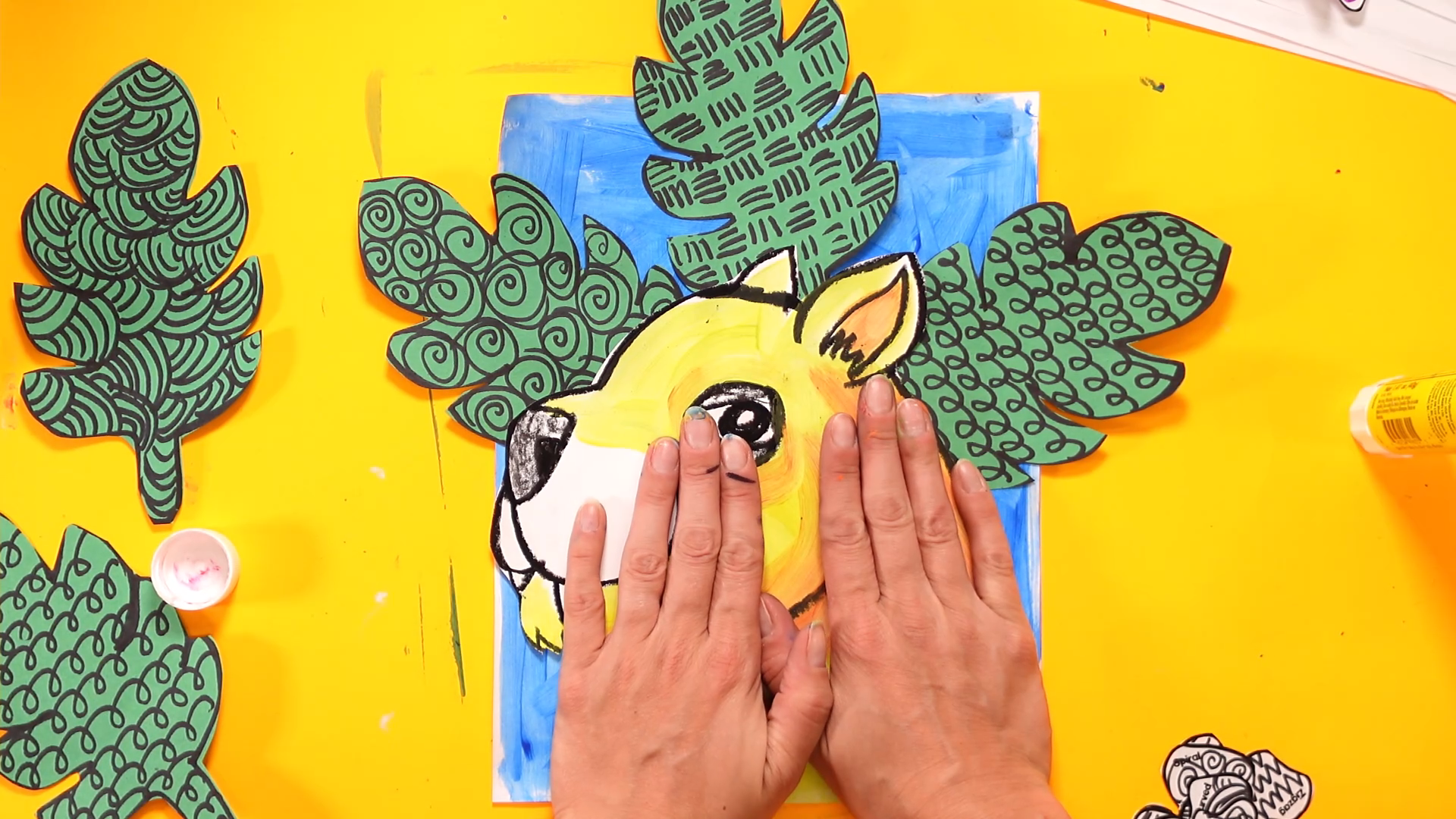
Line Leopards Art Lesson for 3rd Grade: Teaching Types of Lines Through a Bold Leopard Art Project
Teaching line in 3rd grade is such a powerful way to help students begin seeing the elements of art as real creative tools. By this age, students usually understand that lines can outline shapes and help them draw pictures, but they are also ready to go deeper. They are ready to explore how lines can create pattern, texture, movement, rhythm, detail, and visual interest in an artwork.
That is why I love this Line Leopards Art Lesson for 3rd Grade. It gives students a bold, engaging way to explore types of lines while creating a leopard artwork full of pattern, texture, jungle-inspired details, and creative choices. Students are not only practicing line vocabulary. They are using lines with purpose, which is exactly where the learning becomes more meaningful.
A leopard is such a fun subject for this lesson because it naturally invites pattern and texture. Students can explore the shape of the leopard, the expression in the face, the spots, the leaves, and the background while thinking about how different line choices change the feeling of the artwork. A wavy line might feel calm or flowing. A zigzag line might feel energetic. A diagonal line might suggest movement. Repeated lines can create pattern, while closely placed lines can create texture.
This lesson is designed to help students understand that line is not just something artists use to “draw the outside” of an object. Line can do so much more. It can create movement. It can guide the viewer’s eye. It can make the artwork feel bold, detailed, wild, calm, active, or full of personality.
And if you are already a member of the Artastic Collective Art Curriculum, this lesson is included for you inside your membership.
Watch the Line Leopards Art Tutorial
I created a video tutorial for this Line Leopards Art Lesson so students can see the artwork come together visually. You can use the video as a whole-class demonstration, a homeschool art lesson, a visual introduction, or a support before teaching the project yourself.
CLICK HERE TO WATCH THE LINE LEOPARDS ART TUTORIAL
<iframe width="560" height="315" src="https://www.youtube.com/embed/3AZ6--P8yTc?si=Cviq0-uo9GUY_U_t" title="YouTube video player" frameborder="0" allow="accelerometer; autoplay; clipboard-write; encrypted-media; gyroscope; picture-in-picture; web-share" referrerpolicy="strict-origin-when-cross-origin" allowfullscreen></iframe>
The video tutorial gives students a helpful look at the process, but inside the Artastic Collective Art Curriculum, members get access to the complete lesson support so the project can be taught as a full art learning experience, not just a quick art activity.
Why Line Belongs in a 3rd Grade Art Curriculum
Line is one of the basic elements of art, and it is one of the most important building blocks students can use in almost every artwork they create. A line is a mark that moves from one place to another, but artists use lines in many different ways.
Artists use line to outline objects, build shapes, create patterns, add texture, show movement, create emphasis, and guide the viewer’s eye through an artwork. Students in 3rd grade are ready to begin thinking about these ideas more intentionally. They are not only learning to draw different types of lines. They are learning why an artist might choose one type of line over another.
This is such an important shift. Instead of thinking, “I need to draw a line here,” students begin thinking, “What kind of line would help show this idea?” That is the beginning of artistic decision-making.
A bold line might help something stand out. A thin line might add delicate detail. A repeated line might create pattern. A jagged line might show energy. A curved line might make something feel soft or flowing. These are the kinds of connections that help students understand that the elements of art are not just vocabulary words. They are tools artists use to communicate.
How This Leopard Art Project Helps Students Understand Line
This Line Leopards Art Project gives students many opportunities to use line throughout the artwork. They use line to draw the leopard, decorate the spots, create leaf patterns, add texture, and build visual interest in the final composition.
The project is especially effective because the line work has a purpose. Students are not simply filling a page with lines because they were told to practice. They are using line to make the leopard and jungle elements feel more detailed, expressive, and alive.
The leopard spots can become places for line patterns. The leaves can become spaces for zigzags, curves, stripes, dashed lines, or repeating designs. The background can support the feeling of the artwork. The face of the leopard can show expression through careful line choices. Every part of the project gives students another opportunity to make decisions with line.
This helps students understand that artists use lines in many places throughout an artwork, not just around the edges.
Materials for the Line Leopards Art Lesson
For this lesson, students can use materials such as cardstock or thicker paper, oil pastels, wax crayons, markers, tempera paint, paintbrushes, water, scissors, and glue. The materials are flexible, which makes the lesson manageable for different classrooms, art rooms, and homeschool spaces.
Oil pastels or wax crayons are especially helpful for bold line work and resist techniques. Paint gives students an opportunity to create colour, contrast, and layered effects. Cutting and gluing help students build a composition with multiple pieces, which is developmentally appropriate for 3rd grade artists who are ready for more involved projects.
This combination of drawing, painting, cutting, gluing, and arranging helps students practice multiple art skills while still focusing on the main concept of line.
A Condensed Look at the Line Leopards Art Process
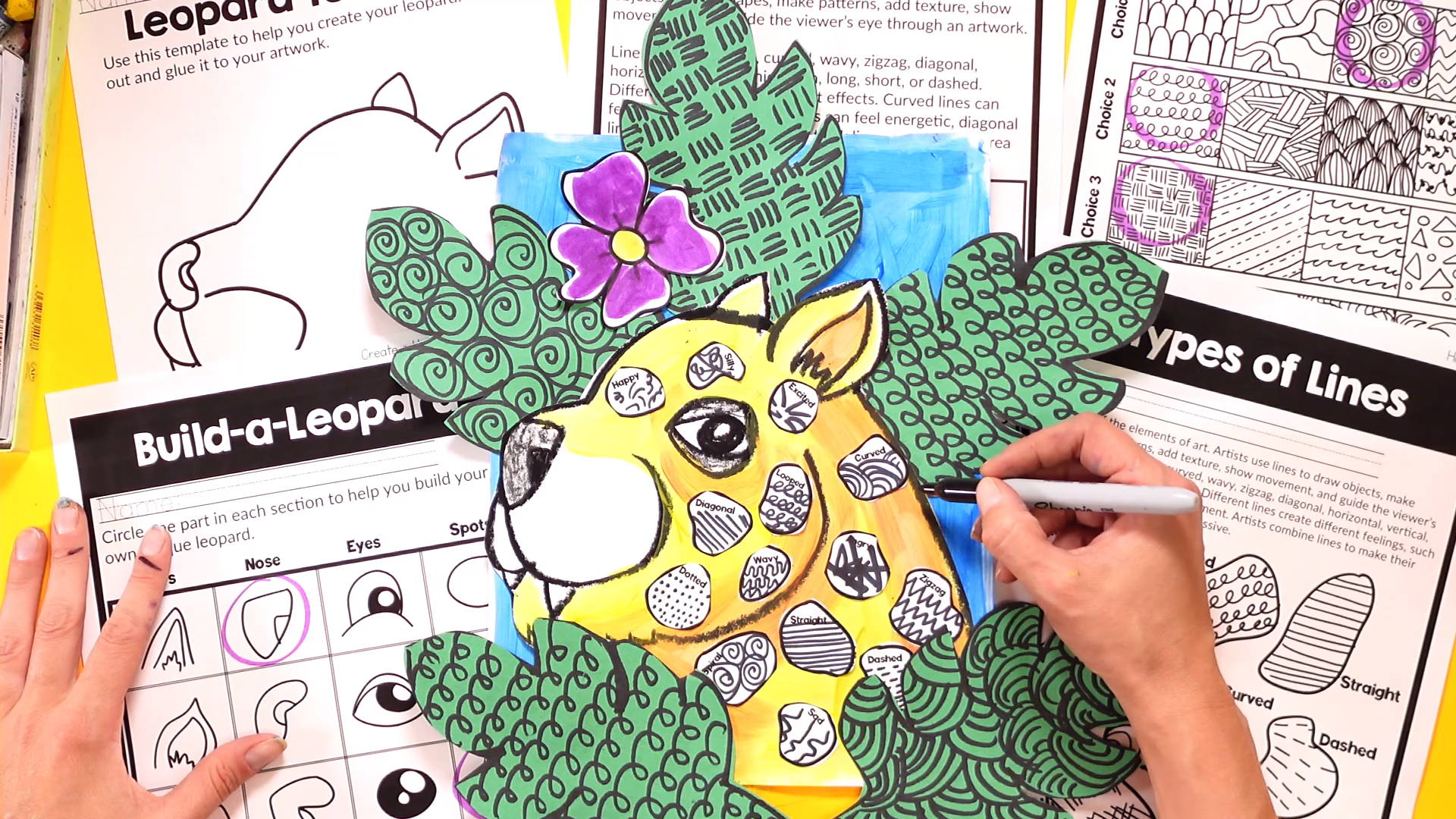
Students begin by creating the leopard. They can use the included template or build their own leopard features using guided supports. The leopard is drawn large enough to become the main focus of the artwork, with attention to the face, ears, nose, cheeks, eyes, chin, and neck. This part of the lesson helps students think about shape, proportion, expression, and how line can define the main subject.
After the leopard is drawn, students paint the leopard using warm colours such as yellow and touches of red or orange to create depth and variation. They also create a painted background, often using cooler colours such as blue to help the warm leopard stand out. This gives students a chance to think about contrast and how colour can support the focal point of an artwork.
Once the painted pieces are dry, students create the supporting details. They can design leopard spots, leaves, and optional flower or jungle-inspired elements. This is where the line lesson becomes especially strong because students use different types of lines to decorate and add texture to the leaves, spots, and other details. They might use zigzag lines, wavy lines, dashed lines, curved lines, diagonal lines, repeated lines, thick lines, thin lines, or patterns that combine several types of line.
To finish, students cut out the leopard and supporting pieces, arrange everything on the background, and glue the composition together. They can layer leaves in front of or around the leopard to create depth and a jungle feeling. The final artwork is bold, expressive, and full of line, pattern, texture, and creative personality.
What Students Learn Through This Lesson
This lesson helps 3rd grade students understand that line can be used in many different ways. Students practice line vocabulary, but they also apply it directly in their artwork. They learn that line can create pattern, texture, detail, movement, and emphasis.
They also practice important art-making skills such as drawing, painting, cutting, gluing, arranging, and reflecting. They make creative choices about leopard features, patterns, leaf designs, colour, placement, and composition. This helps students build independence while still working within a clear lesson structure.
That balance is important in 3rd grade. Students are ready for more choice and complexity, but they still benefit from visual supports, templates, examples, and guided steps. A strong art lesson gives them enough structure to feel successful while still leaving room for their own ideas.
This lesson also supports observation and discussion. Students can look at how lines appear in animal fur, leaves, patterns, and natural textures. They can think about how a leopard’s spots create visual rhythm. They can talk about how jungle leaves might have veins, stripes, or edges that can be shown with line.
These conversations help students see that line exists everywhere, not just in drawings.
Literacy and Reflection Connections
Inside the full lesson, students can also connect their art learning with reading, writing, vocabulary, and reflection. This helps make the project richer and more meaningful, especially for teachers who want to integrate art with literacy or support students in explaining their creative choices.
Students can read about how artists use line in art, respond to questions, practice art vocabulary, and write about line patterns, leopards, or the creative process. Reflection pages help students think about what they enjoyed, what was challenging, what they learned, and how they used line in their artwork.
These connections matter because students should have opportunities to talk and write about their art, not just make it. When students can explain that they used zigzag lines to create energy or repeated curved lines to create texture, they are showing deeper understanding.
They are not just completing a project. They are beginning to think like artists.
Included in the Artastic Collective Art Curriculum
If you are already a member of the Artastic Collective Art Curriculum, this Line Leopards Art Lesson for 3rd Grade is included for you inside your membership.
You can log in, access the full lesson, and use it as part of your 3rd grade art curriculum planning. Inside the membership, you will find the complete lesson support, PDF lesson plan, student materials, visual steps, templates, literacy connections, reflection activities, and classroom-ready resources.
The Artastic Collective is designed to help teachers and homeschool families feel more organized, supported, and confident when teaching art. Instead of trying to piece together random art activities, you can access grade-specific lessons that are built around meaningful art concepts, developmental needs, creative skill-building, and real classroom use.
CLICK HERE TO JOIN THE ARTASTIC COLLECTIVE
Because teaching art should feel inspiring and doable, not like you are building an entire curriculum from scratch while trying to remember where the black oil pastels disappeared to.
Why This Lesson Supports a Strong Art Curriculum
A strong art curriculum gives students repeated opportunities to revisit important concepts in new ways. Line is not something students learn once and then never need again. They use line in drawing, painting, design, sculpture planning, pattern-making, observation, texture, movement, and composition.
This lesson helps students revisit line in a way that feels fresh and age-appropriate for 3rd grade. They are not simply tracing lines or identifying line types. They are using line as part of a finished artwork with multiple layers and creative decisions.
That is what makes the lesson curriculum-friendly. It supports vocabulary, skill development, creative choice, technique, composition, and reflection. It gives students a meaningful project while also helping teachers build a more connected year of art learning.
Inside the Artastic Collective, lessons like this are created to help teachers move beyond “random cute project” planning and into a more intentional art curriculum where students build skills over time.
A Line Lesson Full of Pattern, Texture, and Creative Confidence
This Line Leopards Art Lesson is a beautiful way to teach 3rd grade students about types of lines while giving them a bold artwork they can feel proud of. Students explore line, pattern, texture, movement, composition, and creative choice through a project that feels engaging and memorable.
They learn that lines can do more than outline a picture. Lines can decorate, express, organize, guide, and bring an artwork to life.
You can watch the video tutorial here:
CLICK HERE TO WATCH THE LINE LEOPARDS ART TUTORIAL
And if you want access to the full lesson inside a growing curriculum membership designed to support your art teaching all year long, you can join the Artastic Collective here:
CLICK HERE TO JOIN THE ARTASTIC COLLECTIVE
I hope this lesson brings lots of line, pattern, texture, jungle energy, and creative confidence into your classroom or homeschool.
Sincerely,
Ms Artastic
Discover FREE Art Lessons & Resources
Let's Make Some Art! I will create the Art Lessons & Resources, you inspire the kids!
Stay connected with news and updates!
Join our mailing list to receive the latest news and updates from our team.
Don't worry, your information will not be shared.
We hate SPAM. We will never sell your information, for any reason.
Ms Artastic