Kindergarten Line Art Lesson for Types of Lines | Artastic Collective
Jun 30, 2026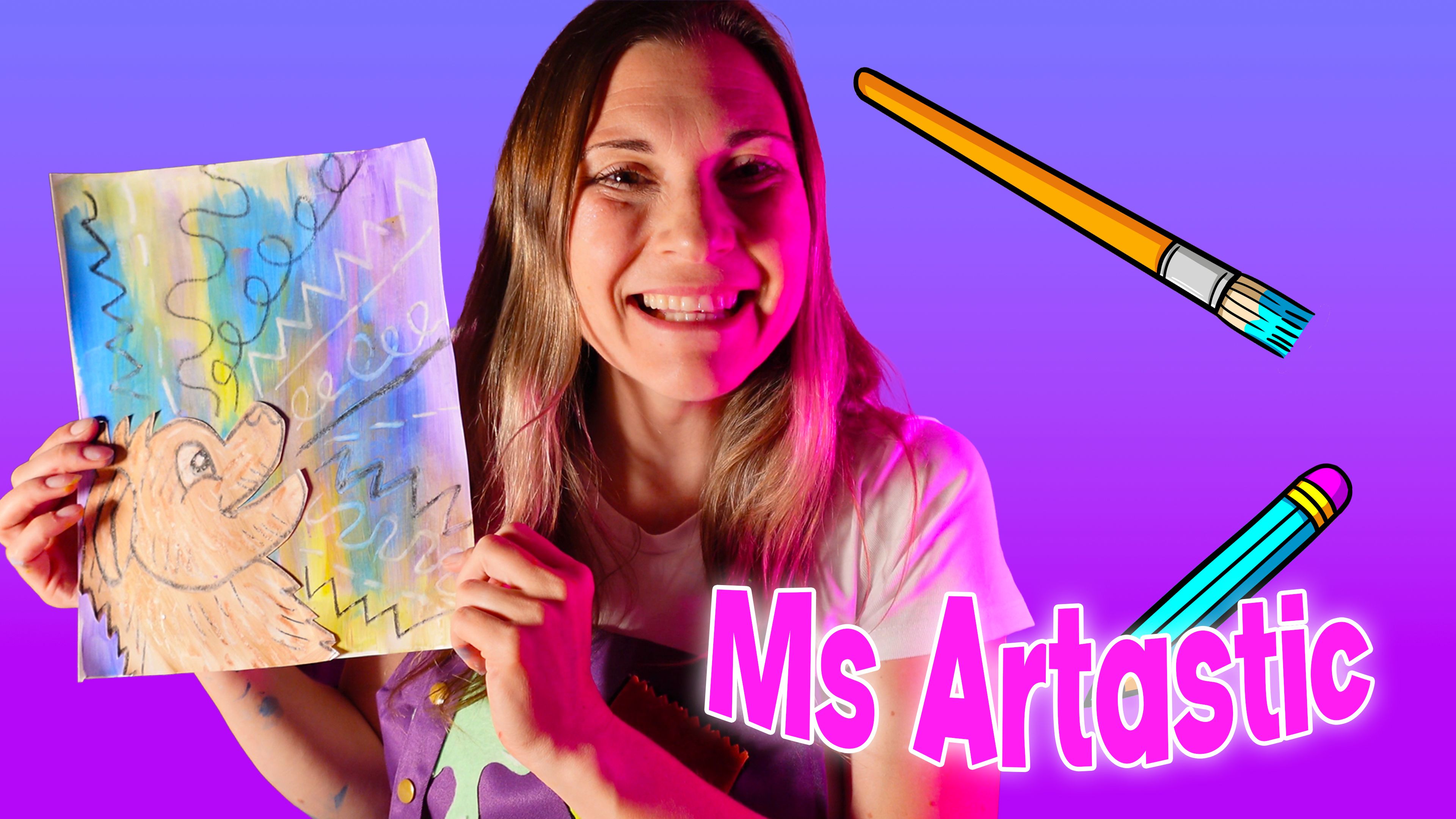
Kindergarten Line Art Lesson: Puppy Barking Types of Lines Art Project
It has been a very full week over here, in the very real-life way where you have big creative plans, a growing to-do list, a baby who is suddenly very interested in everything, and then life decides to toss in a little extra chaos just to keep things interesting. My baby just turned 13 months old, which still feels completely impossible because I am fairly sure she was a tiny newborn about five minutes ago. But now she is becoming this busy, curious, hilarious little person who is more and more interested in drawing, scribbling with crayons, and making marks with sidewalk chalk.
And honestly, watching her begin to explore mark-making has made me feel even more inspired to create art lessons for younger kids.
There is something so meaningful about those first scribbles. A scribble might look small to us, but for a child, it is the beginning of so many things. It is the beginning of hand control. It is the beginning of visual expression. It is the beginning of a child realizing that their hands can make marks, their marks can become ideas, and their ideas belong somewhere outside of their imagination.
That has been on my heart a lot lately as I create more lessons for Pre-K, Kindergarten, and early elementary students. I keep thinking about the kinds of art lessons little artists need when they are just beginning. They need lessons that feel joyful, not intimidating. They need simple concepts, clear visuals, repetition, and room to explore. They need opportunities to build confidence with lines, colours, shapes, and materials. And they need adults who understand that early art is not about perfection. It is about curiosity, play, confidence, and creative growth.
Also, real life update: I got into a car accident this week. We were hit, and while I am doing my best and moving forward, it definitely made things come out a little later than expected. So if you are also having one of those weeks where your plans are moving slower than you hoped, I see you. I will get there. Maybe not in the perfectly organized timeline I imagined, but I will get there.
This week, I am excited to share a new Kindergarten Puppy Barking Line Art Lesson that teaches students about types of lines through a playful, expressive puppy artwork. This lesson is designed to help Kindergarten artists explore line, movement, texture, and creative choice in a way that feels fun and age-appropriate.
And if you are already a member of the Artastic Collective Art Curriculum, this lesson is included for you inside your membership.
Why Line Is Such an Important Concept for Kindergarten Art
Line is one of the most important building blocks in art. Before students can draw detailed pictures, create complex designs, or understand more advanced art concepts, they need time to explore what lines are and how lines move.
For Kindergarten students, learning about types of lines connects beautifully to early drawing, pre-writing skills, fine motor development, vocabulary, movement, and creative expression. A line can be straight, wavy, zigzag, curvy, looped, dashed, dotted, thick, thin, or cross-hatched. Lines can make shapes. Lines can add details. Lines can show movement. Lines can create patterns, texture, sound, energy, and feeling.
When students learn that lines can move in different ways, their artwork begins to open up. A zigzag line can become fur, lightning, grass, or sound. A wavy line can become water, wind, or barking movement. A looped line can show energy or motion. A dashed line can create rhythm. A thick line can feel bold, while a thin line can feel gentle or delicate.
This is why teaching line in Kindergarten matters so much. It gives young artists a creative language they can use again and again. Once they understand that lines are tools artists use, they begin to use them more intentionally in their drawings, paintings, patterns, and designs.
And in this lesson, those lines become the sound and movement of a barking puppy, which makes the concept instantly more meaningful for young learners.
A Puppy Barking Art Project That Makes Line Feel Purposeful
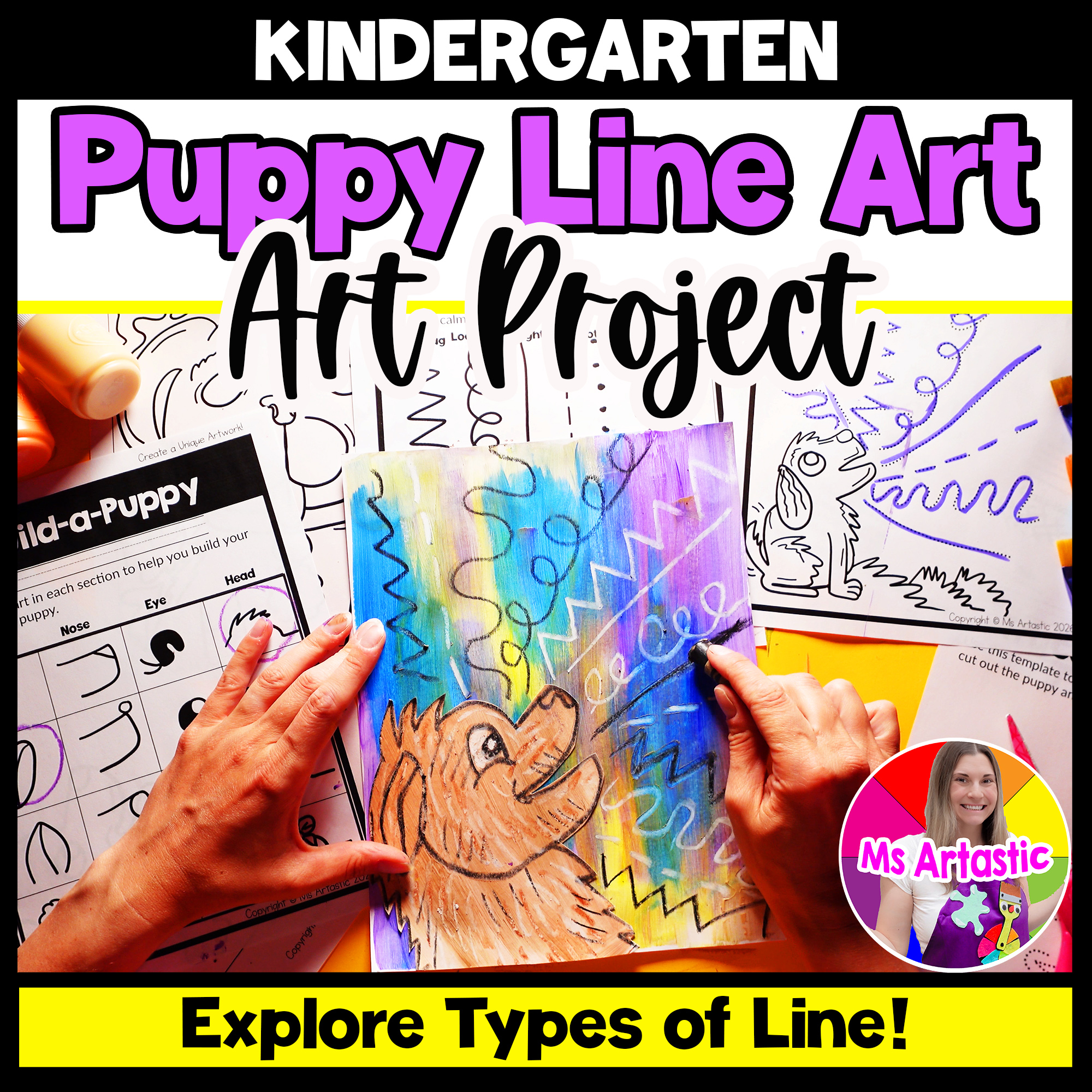
This Puppy Barking Line Art Lesson is a playful way to teach the element of art: line because the lines are not just floating randomly around the page. They have a job. They help show the puppy barking. They make the artwork feel active, noisy, energetic, and full of personality.
That is such an important teaching moment for young artists.
When children understand that artists use lines to communicate ideas, they begin to see art differently. They are not just making marks. They are making choices. They are showing sound. They are showing movement. They are creating expression.
In this project, students create a puppy artwork and then fill the background with different types of lines coming from the puppy’s mouth. These barking lines can be wavy, zigzag, looped, dashed, dotted, straight, thick, thin, or cross-hatched. The finished artwork is colourful, expressive, and full of movement.
The puppy theme also makes the lesson especially engaging for Kindergarten students. Puppies are familiar, playful, and full of personality. Students can imagine what their puppy sounds like, what it is barking about, and what kind of character it might be. Some puppies might be excited. Some might be dramatic. Some might be barking at a squirrel, a snack, or the general injustice of not being allowed on the couch.
And honestly, that kind of imaginative connection is exactly what helps young students stay invested in the artwork.
What Students Learn in This Kindergarten Line Art Lesson
In this lesson, students learn that a line is a mark that moves from one place to another. They explore how artists use lines to draw pictures, make shapes, create patterns, show movement, and add details. They also begin to notice that different kinds of lines can make an artwork feel fun, bold, calm, silly, energetic, or full of motion.
Students practice several types of lines, including zigzag lines, looped lines, straight lines, dashed lines, dotted lines, wavy lines, cross-hatch lines, thick lines, and thin lines. These are excellent vocabulary words for young artists because they can be seen, said, drawn, and acted out.
A great way to introduce this lesson is by inviting students to move the lines before drawing them. They can make a straight line with their arm, wiggle a wavy line in the air, make a zigzag with their finger, loop their hand around and around, or tap out dotted lines on the table. This helps students connect movement to mark-making before they begin the artwork.
The project also supports early art skills like painting, drawing, tracing, cutting, gluing, adding texture, and making creative choices. Students can use a puppy template, practice with trace-and-cut supports, or build their own unique puppy using the Build-a-Puppy page. That flexibility is especially helpful in Kindergarten because students come with different levels of fine motor control and drawing confidence.
The goal is not for every puppy to look the same. The goal is for every student to explore line, make choices, and feel successful.
How the Puppy Barking Line Art Lesson Works
The lesson begins by introducing students to the concept of line and different types of lines. You can use an anchor chart, a handout, a short discussion, or a movement activity to help students understand that lines can move in many different ways.
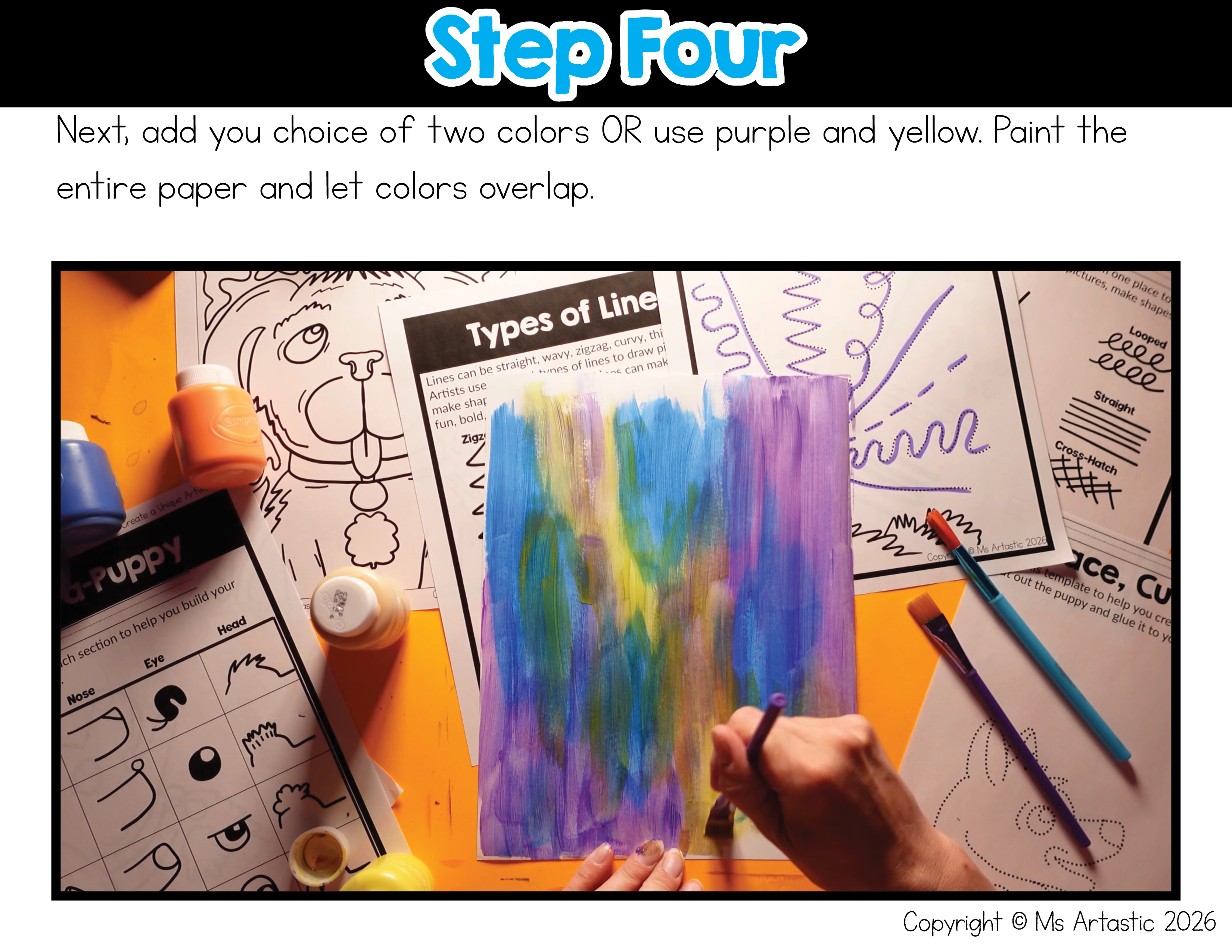
Students then begin the artwork by creating two painted papers. One paper becomes the puppy, using puppy-inspired colours such as brown, yellow, orange, cream, or white. The second paper becomes the background, where students can explore colour and overlapping areas to create an energetic space for the puppy.
Once the papers are dry, students create the puppy. Depending on their needs, they can use the included puppy template, trace and cut a puppy, or follow the step-by-step drawing process. They add details such as the puppy’s head, snout, ear, eye, nose, and body. Then students use lines to create fur texture around the puppy’s body.
After the puppy is cut out and glued onto the painted background, students use black and white drawing tools to create lines coming from the puppy’s mouth. These lines stretch toward the edges of the paper and make the puppy look like it is barking. Students continue filling the background with a variety of line types until the artwork feels full of sound and movement.
This is where the lesson really comes together. Students can see that the lines are helping tell the story of the artwork. The lines are not just decoration. They are showing action.
Why This Lesson Supports Early Art Curriculum Planning
Inside a strong Kindergarten art curriculum, students need repeated opportunities to practice foundational art concepts in different ways. They need to explore line more than once. They need to use colour, shape, texture, pattern, and creative expression through projects that feel age-appropriate and engaging.
This Puppy Barking Line Art Lesson works well as an early-year lesson because it introduces line in a way that feels playful and memorable. It helps students learn vocabulary, practice fine motor skills, follow a process, and create an artwork they can feel proud of.
It also gives teachers an opportunity to observe student readiness. You can see who is confident with drawing tools, who needs more support with tracing or cutting, who understands the line vocabulary, who is ready to make independent choices, and who needs more time practicing basic mark-making.
That information is valuable because Kindergarten art is not only about the finished project. It is about helping students build the skills and confidence they will carry into future lessons.
Literacy, Reflection, and Extension Activities
One of the things I love about this lesson is that it can extend beyond the art project. The full resource includes literacy and reflection supports, which can help teachers connect art to reading, writing, speaking, and thinking.
Students can read about line in art, respond to simple questions, practice sight words, use a word bank of tricky vocabulary, and work with a spelling list related to line. There are also reflection pages where students can think about what was hardest, what was most fun, how their art makes them feel, and what their favourite part of the artwork is.
These connections matter because art is not separate from language. When students talk about their artwork, they build vocabulary. When they explain how they used line, they are practicing communication. When they reflect on their process, they begin to think like artists.
For Kindergarten, these reflections can be simple. A student might say, “I used zigzag lines because my puppy is barking loud,” or “I liked making the wavy lines.” That is meaningful. That is the beginning of students explaining creative choices.
There are also extension activities that invite students to draw a puppy using line to create fur texture, create their own line art, write about a puppy who used chalk to draw lines on a road, or write about how artists can use line to create art. These additions make the lesson flexible for classrooms, homeschool families, early finishers, or teachers who want to connect art with literacy blocks.
Included in the Artastic Collective Art Curriculum
If you are already a member of the Artastic Collective Art Curriculum, this Kindergarten Puppy Barking Line Art Lesson is included for you inside your membership. You can log in, access the full lesson, and use it with your Kindergarten students as part of your art curriculum planning.
This is exactly the kind of lesson support I am building inside the Artastic Collective: grade-specific art lessons that help teachers feel more organized, confident, and supported throughout the year.
Instead of trying to piece together a full art curriculum from random activities, you can access lessons that are designed with art concepts, developmental stages, classroom needs, and student creativity in mind. The goal is to help you teach art in a way that feels meaningful and manageable.
You can join the Artastic Collective Art Curriculum here:
CLICK HERE TO JOIN THE ARTASTIC COLLECTIVE
Inside the Artastic Collective, I am continuing to build lessons for Pre-K through Grade 5 so teachers can have more support for planning a full year of art. These lessons are designed to help students learn foundational art skills while still leaving room for imagination, choice, and joy.
Because teaching art should feel inspiring and doable, not like you are standing in front of a blank planner trying to build a curriculum from scratch while someone asks where the good scissors went.
Watch the Puppy Barking Line Art Lesson Video
I will be embedding the video tutorial for this lesson right here in the blog post so you can see the process and use it as a visual support with your students.
The video can be used as a whole-class demonstration, a support for homeschool learning, or a helpful visual guide before students begin creating. For Kindergarten students, I always recommend pausing as needed. Young artists need time to watch, try, adjust, ask questions, tell you about a dog they know, and then return to their artwork.
That storytelling is not a distraction from the lesson. It is part of how young children connect to the art.
Building a Kindergarten Art Curriculum with Confidence
As I continue creating more lessons for the Artastic Collective, I keep thinking about what teachers really need when building a year of art. You need lessons that are fun enough for students to love, but structured enough to teach something meaningful. You need projects that introduce real art vocabulary and concepts. You need flexibility for different learners. And you need resources that save planning time while still supporting creativity.
This Puppy Barking Line Art Lesson fits beautifully into a Kindergarten curriculum because it teaches a foundational art concept in a memorable way. Students explore line, movement, texture, expression, and creative choice through a project that feels playful and accessible.
It also gives students a strong early experience with the idea that artists use lines with purpose. Lines can show sound. Lines can create movement. Lines can add texture. Lines can help tell a story.
That kind of understanding becomes a building block for future art lessons.
A Playful Line Art Lesson for Young Artists
If you are looking for a Kindergarten art lesson that teaches types of lines in a way that feels joyful, engaging, and age-appropriate, I hope this Puppy Barking Line Art Lesson gives you a sweet way to introduce the element of art line.
It is playful enough for young artists to enjoy, but structured enough to support real learning. Students get to explore line vocabulary, build fine motor skills, create a puppy character, and use lines to show sound and movement in their artwork.
And if you want access to the full lesson inside a growing art curriculum designed to support you all year long, you can join the Artastic Collective here:
CLICK HERE TO JOIN THE ARTASTIC COLLECTIVE
I hope this lesson brings a little barking, line-making, creative joy into your classroom or homeschool.
Sincerely,
Ms Artastic
Discover FREE Art Lessons & Resources
Let's Make Some Art! I will create the Art Lessons & Resources, you inspire the kids!
Stay connected with news and updates!
Join our mailing list to receive the latest news and updates from our team.
Don't worry, your information will not be shared.
We hate SPAM. We will never sell your information, for any reason.
Ms Artastic