Art Teacher Interview Tips: How to Talk About Your Teaching Philosophy
Jul 07, 2026
Art Teacher Interview Tips: How to Talk About Your Teaching Philosophy
Preparing for an art teacher interview can feel exciting, hopeful, and just a tiny bit like your brain has suddenly turned into a supply closet in June. You know there are good ideas in there. You know you care deeply about students, creativity, and art education. But when someone asks, “What is your teaching philosophy?” it can be surprisingly hard to gather all those thoughts into a clear answer that does not sound like you swallowed a textbook.
And honestly, that is normal.
Your art teaching philosophy is not just a polished sentence about creativity. It is the heart of how you teach. It is what you believe about students, art, learning, classroom culture, creative confidence, and the role of visual arts in a child’s education. It is the reason you choose certain lessons. It is the reason you encourage risk-taking. It is the reason you make space for mistakes, experimentation, discussion, reflection, and student voice.
So when you are preparing for an art teacher job interview, the goal is not to memorize a perfect answer. The goal is to understand your own beliefs well enough that you can speak about them clearly, warmly, and confidently.
Because your future school does not just want to know that you can teach a lesson. They want to know how you think about students.
Start With What You Believe About Students
A strong art teacher philosophy usually begins with what you believe about the learners in front of you. Before you talk about projects, materials, assessment, or classroom management, think about your core belief about students.
Do you believe every student is capable of creativity?
Do you believe art should be accessible to all learners?
Do you believe students need both structure and creative choice?
Do you believe art helps children build confidence, problem-solving skills, identity, and communication?
These beliefs matter because they shape the way you teach. If you believe every student can be creative, then your lessons will be designed to help students access art at different levels. If you believe students need confidence, then you will likely provide step-by-step support, encouragement, and opportunities for personal expression. If you believe art is a place for problem-solving, then you will welcome mistakes as part of the process.
When you are answering interview questions, try to talk about students first.
For example, you might say something like:
“My teaching philosophy is rooted in the belief that every student is capable of creativity. I want my art room to be a place where students feel safe to explore, make mistakes, build skills, and express their ideas visually.”
That kind of answer is simple, clear, and student-centered. It tells the interviewer that you see art as meaningful learning, not just a fun extra.
Explain Why Art Education Matters
In an art teacher interview, you may be asked why art is important, especially if the school is looking for someone who can advocate for the value of the arts. This is your chance to speak with confidence about what art education gives students.
Art helps students do so much more than make a finished project. It helps them observe, imagine, plan, create, revise, reflect, and communicate. It builds fine motor skills, creative thinking, visual literacy, confidence, focus, and problem-solving. It gives students a chance to connect with culture, identity, history, materials, and ideas.
And for many students, art is the place where they feel successful in a different way.
You can talk about art as a subject that supports the whole child. It gives students a creative outlet, but it also teaches persistence, decision-making, and flexible thinking. Those are skills students carry far beyond the art room.
A strong answer might sound like:
“I believe art education is essential because it helps students develop creative thinking, problem-solving, confidence, and visual communication. Students learn how to make choices, reflect on their work, and express ideas in ways that go beyond words.”
That answer shows that you understand the deeper purpose of art education. It also helps interviewers see that your classroom will support student growth in meaningful ways.
Talk About Structure and Creative Choice
One of the best things you can include in your art teaching philosophy is how you balance structure with creativity. This is especially important because art teachers need to support students who have very different skill levels, confidence levels, learning needs, and creative personalities.
Some students need clear steps. Some need visual examples. Some need extra time. Some need permission to take risks. Some need help getting started. Some need to know there is no single “right” answer. Some will ask if they can draw a dragon no matter what the lesson is, and honestly, that is useful classroom data.
In your interview, you can explain that you believe students do best when lessons provide enough structure to help them feel successful, while still leaving room for personal expression.
This shows that you are thoughtful about lesson design.
You might say:
“I like to create lessons that give students a clear foundation, such as demonstrations, visual supports, and skill-building steps, while also offering opportunities for creative choice. I want students to feel supported, but I also want their artwork to reflect their own ideas.”
This is a beautiful interview answer because it shows you understand that art teaching is not just “do whatever you want” and it is not “everyone’s artwork must look exactly the same.” It is a balance. Structure builds confidence. Choice builds ownership.
Connect Your Philosophy to Classroom Environment
Your teaching philosophy should also connect to the kind of environment you want to create. Interviewers want to know how your beliefs show up in the art room.
Do you want your classroom to feel safe, inclusive, creative, organized, respectful, joyful, calm, or inspiring? Probably several of those things.
It is helpful to talk about the art room as a place where students can experiment, learn routines, care for materials, respect others, and feel comfortable sharing ideas. A strong art room culture does not happen by accident. It is built through expectations, relationships, routines, and consistent encouragement.
You might say:
“My goal is to create an art room where students feel safe to try new things, respectful of materials and each other, and proud of their creative growth. I want students to understand that mistakes are part of the artistic process and that their ideas have value.”
That kind of answer shows both warmth and classroom leadership. You are not just saying you want a fun art room. You are explaining the culture you want to build.
Mention Inclusion and Accessibility
A strong art teacher interview answer should show that you understand students come with different abilities, experiences, strengths, and needs. Art should be accessible, welcoming, and adaptable.
You can talk about using visual supports, demonstrations, differentiated options, flexible materials, step-by-step guidance, and open-ended extensions. You can also mention that you value diverse artists, student identity, and multiple ways of expressing ideas.
Inclusion in the art room means students can access the learning even if they are at different skill levels. It means students see themselves reflected in the curriculum. It means students are encouraged to bring their own perspectives, cultures, interests, and experiences into their creative work.
You might say:
“I believe art should be accessible to all students. I use visual examples, demonstrations, scaffolded steps, and opportunities for choice so students can enter the lesson at their own level while still being challenged creatively.”
That is clear, practical, and interview-friendly. It tells the hiring team that your philosophy is not just idealistic. It is something you can put into practice.
Be Ready to Give an Example
In interviews, it is always helpful to connect your philosophy to a real example. A beautiful teaching philosophy is stronger when you can show what it looks like in action.
For example, if you say you believe in creative choice, you could explain how you might teach a landscape lesson where students learn foreground, middle ground, and background, but choose their own setting, colors, weather, and details.
If you say you believe in student confidence, you could describe using guided drawing, visual steps, and practice pages to help hesitant students get started.
If you say you believe in art as a tool for self-expression, you could describe a self-portrait, identity collage, sketchbook prompt, or artist statement activity.
A sample answer might look like:
“For example, if I were teaching a mixed media animal project, I might begin with a demonstration on basic shapes and texture techniques, then allow students to choose their animal, colors, patterns, and background details. That way, students are practicing the same core skills, but their final artworks still feel personal and expressive.”
This kind of answer helps an interviewer picture you teaching.
And that is exactly what you want.
Keep Your Answer Clear and Human
One of the biggest mistakes teachers make in interviews is trying to sound too formal. Yes, you want to be professional. But you also want to sound like a real person who genuinely cares about students.
Your art teacher interview answers do not need to be full of complicated educational buzzwords. You can speak clearly and sincerely. Use words you would actually say.
Instead of trying to sound impressive, aim to sound grounded.
A strong philosophy answer could be:
“I believe every student can be creative, and my role as an art teacher is to help students build the skills, confidence, and curiosity they need to express their ideas. I want my art room to be structured enough that students feel supported, but open enough that they can make choices and develop their own artistic voice.”
That answer is not overly complicated, but it is strong. It shows belief, structure, creativity, and student-centered teaching.
Prepare for Follow-Up Questions
Once you talk about your teaching philosophy, an interviewer may ask follow-up questions. They might ask how you support reluctant artists, how you assess student artwork, how you handle classroom management, how you differentiate lessons, or how you connect art to other subjects.
It helps to prepare a few examples ahead of time.
Think about how your teaching philosophy connects to:
Classroom routines and expectations.
Supporting students who say they are not good at art.
Differentiating for different ages or abilities.
Assessing effort, process, craftsmanship, reflection, and growth.
Teaching the elements of art and principles of design.
Building student confidence.
Using sketchbooks or visual journals.
Connecting art to literacy, history, science, culture, or identity.
Introducing diverse artists and art traditions.
You do not need a perfect script for every question, but having a few examples ready will help you feel more confident.
What to Avoid When Talking About Your Teaching Philosophy
When answering this question, try not to make your philosophy only about projects. Projects are important, of course, but your philosophy is bigger than “I like teaching painting and clay.” Interviewers want to know what you believe about teaching and learning.
Also avoid saying things that sound too rigid, like every student should produce the same result, or too unstructured, like students can do whatever they want all the time. Strong art teaching usually lives in the thoughtful middle. Students need guidance, routines, skill development, and expectations, but they also need creative choice and room to express themselves.
Try not to use language that makes art sound like a break from “real learning.” Art is real learning. You can absolutely talk about joy, creativity, and expression, but also connect art to skills, growth, thinking, and communication.
Your answer should help the interviewer see that you value art as an essential part of education.
A Simple Formula for Your Art Teaching Philosophy Answer
If you are not sure how to organize your answer, try this simple structure.
Start with your belief.
Explain what that looks like in your classroom.
Connect it to student growth.
Give a short example.
You might say:
“I believe every student is capable of creativity, and my role as an art teacher is to help students build confidence, skills, and creative problem-solving. In my classroom, I provide clear demonstrations, visual supports, and routines so students feel safe and prepared, while also offering opportunities for personal choice. I want students to learn that art is not about perfection, but about trying, reflecting, and developing their own ideas. For example, I might teach a lesson where all students practice a specific skill, like pattern or texture, but choose their own subject, colors, and details so the final artwork feels personal.”
That answer gives the interviewer a complete picture. It is clear, thoughtful, student-centered, and practical.
Practice, But Do Not Over-Rehearse
It is helpful to practice your answer out loud before your interview. Sometimes an answer sounds beautiful in your head but becomes a tangled ball of yarn when you try to say it under pressure. Practicing helps you find your natural wording.
But do not over-rehearse to the point where you sound robotic.
You want to know your main ideas, not memorize every word. If you understand your own teaching philosophy, you can answer naturally even if the question is worded differently.
Practice saying your answer in a few different ways. Keep it warm, clear, and confident. Imagine you are explaining your beliefs to a thoughtful colleague, not performing a speech in front of a panel of judges holding clipboards.
And remember, the interviewers are not looking for perfection. They are looking for a teacher who knows why they teach the way they do.
Let Your Passion for Art Education Show
Your teaching philosophy is also a place where your love for art education can shine. You do not need to be over-the-top, but you can let your passion come through.
Talk about how you want students to feel proud of their creativity. Talk about how art helps students build skills and confidence. Talk about how you love seeing students realize they can create something meaningful. Talk about how the art room can be a place where different kinds of learners thrive.
A sincere answer is memorable.
Hiring teams hear a lot of interview answers. What often stands out is not the most polished wording, but the teacher who genuinely cares and can explain their beliefs in a grounded, student-focused way.
Support Your Teaching Journey With Free Art Lessons
If you are preparing for an art teacher interview, building your teaching philosophy, or thinking about how you want your future art room to feel, it can be helpful to explore different kinds of lessons and resources. Seeing strong lesson ideas can help you clarify what you value: structure, creativity, student choice, skill-building, reflection, accessibility, and engagement.
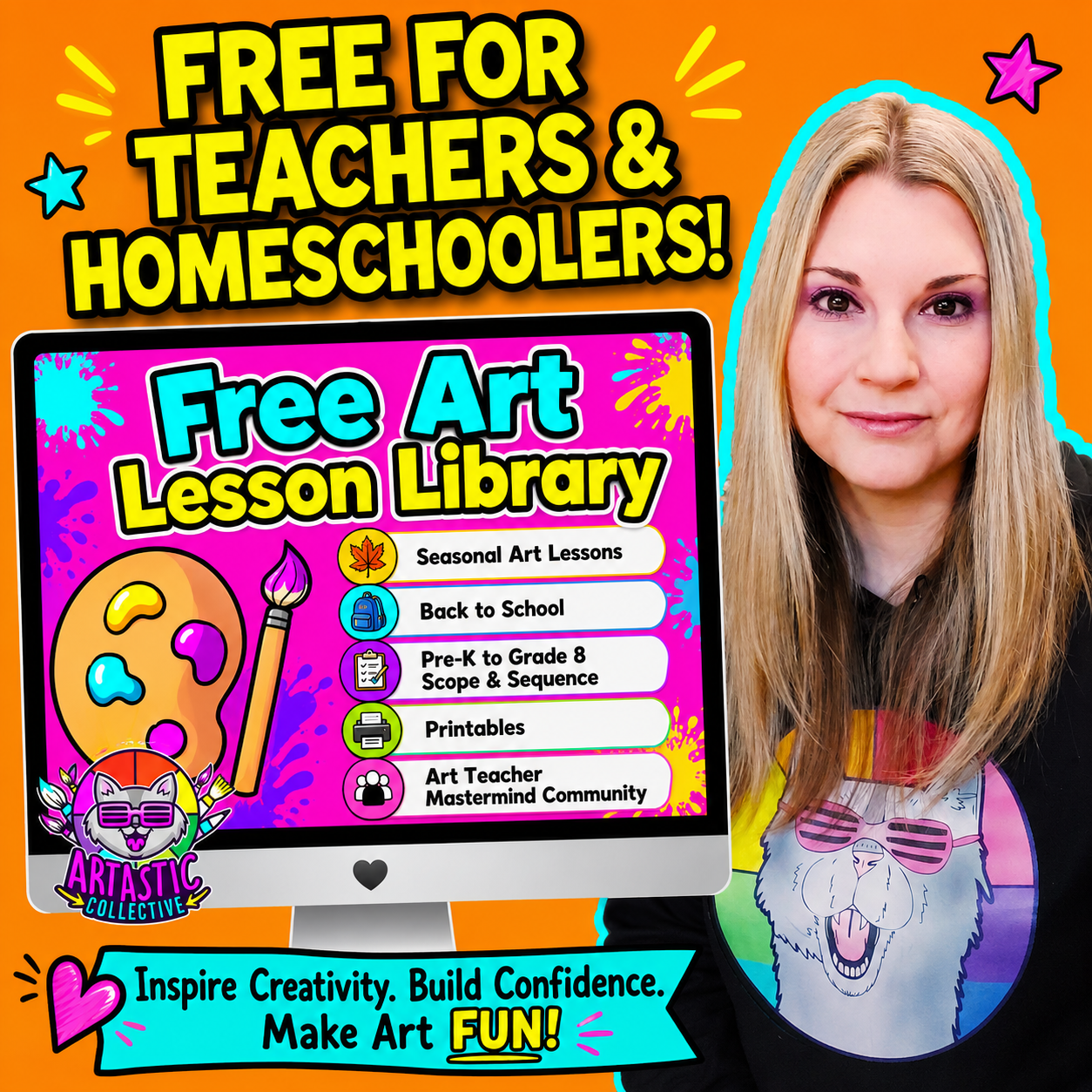
That is why I created the Free Art Lesson Library.
Inside, you can find free art lessons, seasonal art projects, back to school art resources, art planning tools, and creative ideas for art teachers, classroom teachers, and homeschool educators. These resources can help you think about lesson structure, student engagement, and creative planning as you prepare for teaching, interviews, or the year ahead.
You can join the Free Art Lesson Library here:
Whether you are a new art teacher, preparing for interviews, returning to the classroom, or simply looking for fresh inspiration, the library is there to support you with practical, creative resources.
Final Thoughts
Talking about your teaching philosophy in an art teacher interview does not have to feel scary. At its heart, this question is an invitation to explain what you believe about students, creativity, and learning.
Start with your belief that students are capable.
Explain how you support them.
Talk about the kind of art room you want to build.
Connect your answer to confidence, creativity, skills, inclusion, and student growth.
Then give a simple example that shows your philosophy in action.
You do not need to sound perfect. You need to sound thoughtful, prepared, and genuinely connected to the work of teaching art.
Because your philosophy is not just something you say in an interview.
It is the foundation for the creative space you will build for your students.
Sincerely,
Ms Artastic
Discover FREE Art Lessons & Resources
Let's Make Some Art! I will create the Art Lessons & Resources, you inspire the kids!
Stay connected with news and updates!
Join our mailing list to receive the latest news and updates from our team.
Don't worry, your information will not be shared.
We hate SPAM. We will never sell your information, for any reason.
Ms Artastic